Shaft Lean & Compression: Impact-First Scottsdale golf lessons

Hi. My name is Coach Erik Schjolberg, owner of EJS Golf located in Scottsdale, AZ. I teach Scottsdale Golf Lessons from an indoor and outdoor bay at McCormick Ranch and online golf lessons. My priority is immediate impact-first improvement: ball first then turf, predictable start line, controlled shaft lean, and rotation. These are not feel-based aphorisms. They are cause-and-effect relationships. If you control low point and face, the lie stops being an excuse.
Thesis: The quickest way to more consistent iron contact, lower penetrating trajectory, and measurable compression is to fix the trail wrist/lead wrist matchup so you retain trail wrist extension longer through impact. Done correctly you get forward shaft lean, ball-first then turf contact, and a predictable low point without rebuilding your whole swing.
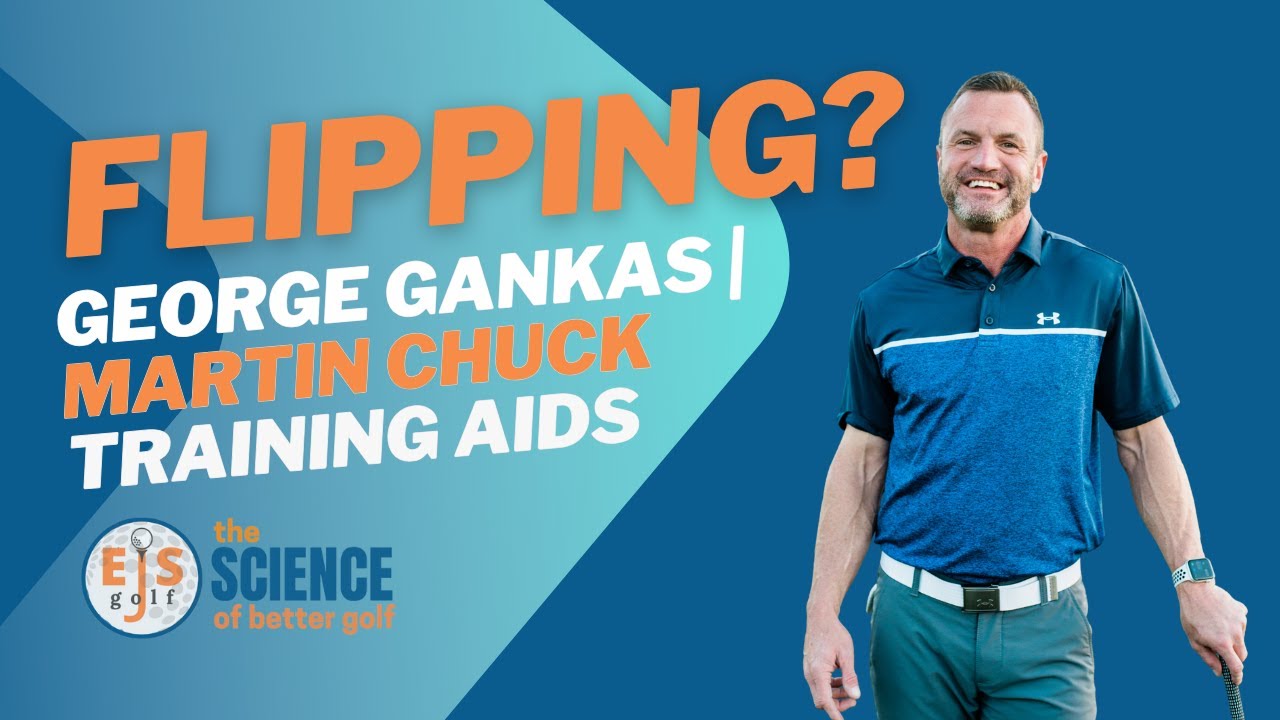
I teach impact first. If you want to improve how the ball reacts immediately, the place to start is the wrist relationship at impact. I use two compact, measurable tools in lessons—the George Gankas THX and the Tour Striker FlexClick by Martin Chuck—to rush the learning curve on one specific problem: premature release, or "flipping" and casting with the trail wrist.
Early in a lesson I'll have students view a quick set of checkpoints using Trackman or simple strike feedback: where the low point is relative to the ball, whether the club face is square or open at impact, and whether the contact is ball first, turf second. Those three numbers tell you the truth. If the low point is behind the ball, the face is open at impact, or you're hitting turf before ball, the common root causes are often wrist matchups and a lack of rotation—not a mysterious timing problem.
If you want the same feel I give my students, download the drills guide at https://ejsgolf.com/my-drills. That guide sets up a short practice pathway so the sensations you create with training aids transfer immediately to the ball.
Why shaft lean matters for impact
Shaft lean is not a cosmetic finish. It's a mechanical condition with predictable effects on launch, spin, and strike quality. When your hands are ahead of the club face at impact (forward shaft lean), you compress the ball into the club face so the ball launches lower and faster, spin is more controlled, and the contact point is more consistent. The measurable outcomes are:
Lower, more penetrating launch angle at a given loft
Higher ball speed transferred through a centered strike
Reduced spin variance and tighter dispersion
Predictable start line and curvature when rotation and face control are matched
All of that comes from moving the low point forward and striking the ball before turf. That movement depends heavily on how the wrists load and release. If you release the trail wrist too early—casting—the club loses its angle, the club face often stays open, and you immediately lose forward shaft lean. The result: fat shots, thin shots, or weak, high-launching iron contact.
The mechanics: trail wrist extension and lead wrist flexion
In plain mechanical terms I want two things at impact:
Trail wrist retained in extension longer into the downswing so the shaft can deliver forward lean
Lead wrist allowed to flex so the club face squares naturally via rotation rather than by flipping with the hands
These are matchup conditions. How much trail wrist extension you need relative to lead wrist flexion depends on your grip strength, face delivery, and how you rotate your torso. I reject the one-size-fits-all "keep your left arm straight" or "hold the handle" myths. Instead I teach matchups: if your grip is weak you will naturally flex more; if your grip is strong you will show less flexion. Both can work—when the body rotation and face-path match.
How the THX and FlexClick train real shaft lean
Both the THX (George Gankas) and the Tour Striker FlexClick (Martin Chuck) are simple training aids designed to make the wrist matchup obvious. I use them in lessons for the same purpose: to give a binary feedback—the device snaps or it doesn’t. That snap is your coach. It tells you whether you held extension through the hinge and into the start of the downswing, or whether you released early.
Here is how I use them, and why it transfers:
Mount the THX on the trail wrist (or the FlexClick on either wrist depending on the student). Put it on where it stays put—forefinger placement often helps reduce slippage.
Make very small swings without speed. The goal is to train hinge and retention, not to simulate full-speed release.
Focus on rotation as you come through. If you stop rotating, you cannot maintain the extension and create shaft lean. Rotation creates the relative motion that allows the club to compress the ball while the hands are ahead.
If the device snaps loudly early, you cast. If it does not snap and you finish with the club toe down and the club head outside the hands, you are demonstrating the retained extension—but you must still learn to close the face with rotation.
This is an impact-first learning sequence. The training aid isolates the wrist relationship so your nervous system can feel and remember what a later release feels like. When you remove the device and go to real swings, those sensations help you reproduce forward shaft lean without resorting to a forced handle hold or an unnatural grip change.
Rotation is non-negotiable
I will say this bluntly: you cannot create the shaft lean I want without rotation. If you stop rotating and only try to manipulate the handle with your hands, you will either (a) hide the fault with a fake-looking finish or (b) simply fail under speed. I see plenty of internet content where people suggest locking the wrists so the club never releases. That's not a real full-speed iron shot. The club must release—just later and under the control of rotation.
Rotation does two critical jobs:
It accelerates the shaft so that the release happens at the correct point, creating compression.
It helps square the club face through a natural twisting of the shaft. The knuckles-down cue—think about turning your knuckles toward the ground through impact—is a compact way to communicate the shaft twist needed to close the club face while retaining extension longer.
Drill progressions and how I coach them
Progressions matter. I do not ask a student to immediately hit full shots with these devices. The sequence I use in lessons mirrors how motor learning works: simple to complex, high success rate to add confidence.
Example progression I use in a lesson (and you can use at home):
Without a club, practice the hinge: trail wrist extension at the top, feel a late release while rotating the torso into a covering chest-over-ball finish.
With the THX or FlexClick on your trail wrist, make tiny half swings, feel the hinge and go to "impact" without speed. The device should not snap. Practice this until it’s reliable from both sides of the room or from different addresses.
Take a small pitch or half wedge swing with the device on. Keep the swing slow and focus on rotation and finishing with the hands ahead of the club face. Expect most shots to go right early—don’t worry. That right miss is acceptable because it indicates you retained extension rather than flipped to close the face by casting.
Introduce the knuckles-down twist cue or "motorcycle move" to feel how to close the face while keeping the hands ahead. This is not a wrist flip; it’s a shaft twist coordinated with rotation.
Remove the device and hit full swings, monitoring strike. The goal is ball-first then turf and a lower launch with compression. Use impact tape or a simple face marker to track center strikes.
Be honest with results. Initially you may hit off the toe or thin because you are still learning the timing. That is acceptable. You should not accept worse strike long term. The mental model I give students is direct: train the body positions first, then bring the club speed back and the center strikes will follow.
Common mistakes I see (and how to fix them)
When students come to me after trying this at home, the common mistakes are predictable:
They try to hold the handle and never allow any release. Fix: remind them the club must release—later. Train with small swings and rotation so the release happens under control.
They stop rotating and attempt to flip the hands to close the club face. Fix: re-introduce rotation cues and the knuckles-down twist so the face closes via shaft rotation rather than hand flipping.
They expect immediate center strikes. Fix: accept early variance. Focus first on consistent body positions and low point forward, then center strikes will become reliable without losing the feel.
They only practice with the aid on and never transfer to real swings. Fix: follow a progression to remove the aid and check with impact markers or a launch monitor.
Practice plan — one week to measurable change
Train with purpose for 10 to 20 minutes per day. Here is a simple practice plan you can follow this week. Day one and two emphasize the hinge and retention. Day three and four add small swings with the training aid and rotation. Day five and six remove the aid and test ball-first contact with a wedge. Day seven is a short evaluation—use impact tape or a launch monitor if possible.
Daily template (15 minutes):
3 minutes: dry hinge reps without a club—feel the trail wrist load and the chest covering the ball.
6 minutes: device on, small swings focusing on rotation and not snapping early. Practice the knuckles-down cue and a finish with hands ahead.
6 minutes: full swings without the device, checking strike quality—ball-first then turf. If using a Trackman, record low point and face angle to track progress.
Repeat for six days and on the seventh day record a short video of your impact and upload it to your practice log. Compare the low point and strike location to your starting point. I want you to see measurable improvement from day one.
For students outside Scottsdale I provide online lesson options to guide this progression at https://ejsgolf.com/online-golf-lessons. If you want in-person coaching and a data-driven check, schedule an introduction at https://ejsgolf.com/book-now. I teach these drills every week at my McCormick Ranch teaching bay; the translations to on-course play are immediate when done with rotation and impact-first intent.
How to know you’re improving (objective checks)
Subjective feels are useful, but measurable feedback is gold. Use these objective checks:
Ball-first then turf contact on wedge shots (visual and feel)
Forward shaft lean at impact observable in video or with impact tape
Center strikes trending toward the middle of the club face
Lower launch and tighter dispersion on irons (if using a launch monitor)
If those checks improve, your low point moved forward and your shaft lean improved. If they do not, revert to the small-swing progressions and keep the training aid on until it becomes consistent.
Why I prefer this approach over "traditional" cues
Old-school cues like "keep your head down" or "keep your left arm straight" are blunt instruments. They sometimes get short-term compliance but rarely produce reproducible, pressure-proof impact. My coaching is matchup-based and science-driven. I want you to control the variables that actually determine impact: wrist matchups, rotation, low point. Those are the mechanisms that produce ball-first contact and compression. That means we prioritize the drill that produces consistent impact without asking you to change everything about your swing.
Equipment and matchups
Matchups matter. How much wrist extension you need depends on your grip and face delivery. If you have a weak grip you will naturally show more lead wrist flexion; a strong grip will look different. Both can produce great results when rotation and shaft lean are coordinated. If you have questions about whether the THX or FlexClick is right for you, I keep both available at EJSGolf.com/gear and I set up discounts for students so you can test which one gives the clearest feedback for your motor learning.
Common Q&A during lessons
Students often ask: "Will this slow my swing or reduce distance?" The short answer is no—if you do not stop rotating. The training is intentionally done slow at first so the pattern sticks. When the pattern scales to full speed, you will gain compression and often see carry increase because of better energy transfer at impact. The club releases—it just releases later and under better control.
Final coaching note
I am direct about what works. If you paste a drill from social media that looks like a perfect static finish with no release, I will push back. That is not a realistic full-speed iron shot. Real iron impact is a combination of retained trail wrist extension, coordinated rotation, and a controlled shaft twist to close the face. When you train those matchups, you will get predictable ball-first contact, lower launch, and better compression.
If you want the drills and a short practice plan in one download, get my Free Drills Guide. If you’re local to Scottsdale and want to check the numbers in person, book a lesson at or learn more about in-person by clicking on the Scottsdale golf lessons link.
FAQs
1. How long before I see improved ball-first contact?
Most students see improvement in low point and ball-first contact within a few practice sessions if they follow the progression: hinge, device, small swings, full swings. Objective center-strike consistency may take longer but the direction of change is immediate.
2. Will these drills force me to change my grip?
No. The drills teach wrist matchups and rotation. Grip modifications are optional and only recommended when a student’s grip prevents face control after the drill work.
3. Can I practice these drills at home without a range?
Yes. Perform hinge reps without a club and small swings with the device. You do not need to hit balls to build the correct motor pattern; hitting comes after the pattern is reliable.
4. Which training aid should I buy first?
Either works. The THX and FlexClick provide the same binary feedback. Pick the one that fits your wrist and doesn’t slip during hinge reps. I offer both at https://ejsgolf.com/gear for convenience.
5. Will this help my driver and long game too?
The principles carry over: better sequencing, rotation, and face control improve all clubs. However, the wrist matchups and impact dynamics scale differently with speed, so apply the progression and measure before expecting identical results to short irons.
Get my Free Drills Guide now at and start training the exact progressions I use in lessons. If you want a data-driven, in-person check on your progress in Scottsdale, book a lesson. Train smart, focus on impact, and you’ll see compression and predictability improve quickly.


