
EJS GOLF BLOG
Learn about the golf swing and what you can do to improve your score on the golf course. Fill out the form below if you have any questions or want to set up a time to talk.
Mastering the Art of Golf with Coach Erik Schjolberg
I’m Coach Erik Schjolberg, and welcome to the EJS Golf blog—Scottsdale’s authority on science-driven ball-striking. Here you’ll find in-depth analyses of swing mechanics, data-backed breakdowns of impact and launch dynamics, and actionable practice routines designed to rewire your muscle memory from day one. Each post peels back the curtain on cause-and-effect in your swing, whether you’re chasing Tour-level precision, collegiate consistency, or lower weekend scores. Dive into our deep-dive articles, master the drills that drive real improvement, and transform your game with proven science and strategy.
But let’s be clear: golf isn’t only about perfecting swing mechanics. The mental battle you fight on each tee is often the one that determines whether you stay in the game or walk off the course. Here, we’ll tackle the psychological hurdles—the pressure of a tight leaderboard, the frustration when a swing fails under stress, the self-doubt that creeps in after a bad hole. You’ll learn evidence-based mental strategies—visualization routines, pre-shot rituals, stress-management techniques—that fortify your focus and resilience. Mastering these mind-set tools is just as critical as dialing in your impact position, and I’ll show you exactly how to integrate mental training into your practice for lasting confidence on every shot.
Explore Our Blogs
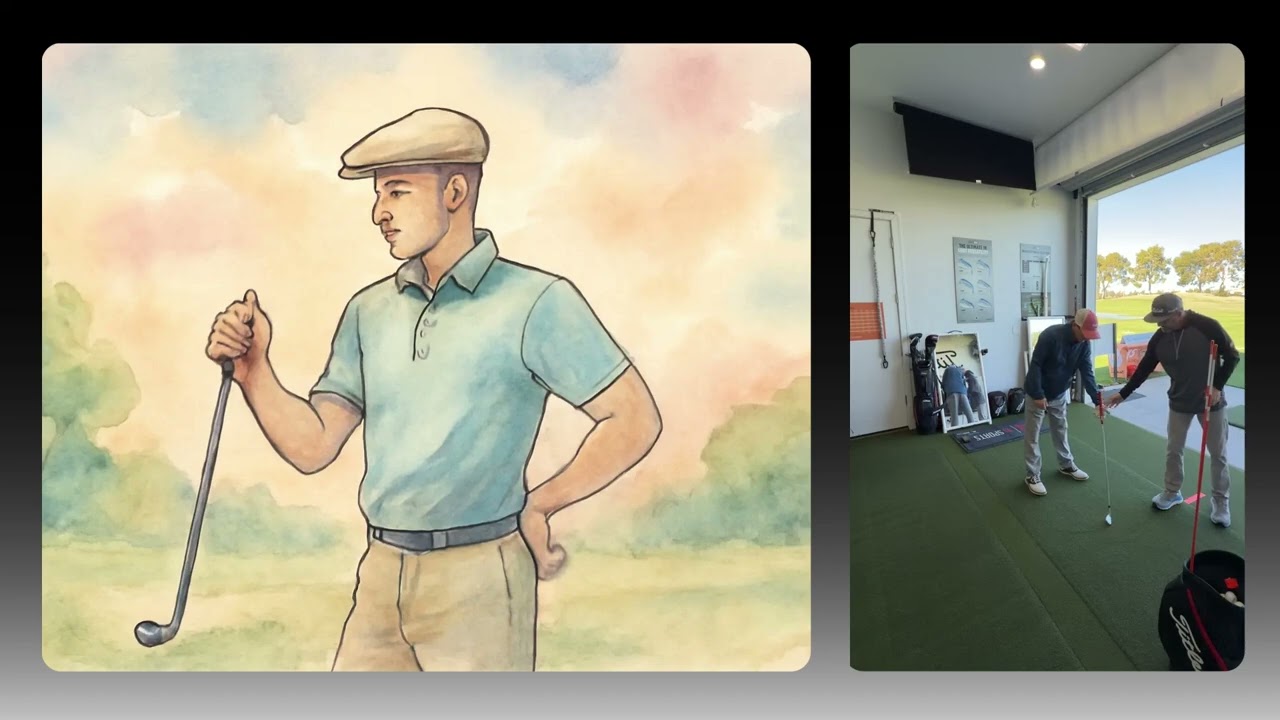
Scottsdale Golf Lessons: Fix Your Iron Impact & Rotation
Scottsdale Golf Lessons: Fix Your Iron Impact & Rotation
Hi. My name is coach Erik Schjolberg, owner of EJS Golf located in Scottsdale, AZ. I teach Scottsdale Golf Lessons from an indoor and outdoor bay at McCormick Ranch and online golf lessons. My priority is immediate impact-first improvement: ball first then turf, predictable start line, controlled shaft lean, and rotation. These are not feel-based aphorisms. They are cause-and-effect relationships. If you control low point and face, the lie stops being an excuse.

Thesis - the problem I solve and the fast change when done correctly
I help golfers regain power and predictable iron contact by solving a single mechanical mismatch: poor left-side loading and an over-extended arm swing that cancels rotation and moves the low point behind the ball. When you learn to load into the left side, hold the finish and eliminate the trail-arm collapse, you get immediate, measurable benefits — more shaft lean, more ball-first contact, less turf contact behind the ball, and a straighter start line with controlled curvature. If you want science-driven Scottsdale Golf Lessons that change strike quality from day one, this is where you start. Early in the process I use real-time feedback and small swings to create reliable changes you can practice between lessons. For an overview of what I teach and how I track improvements, visit EJSGolf.com.
Why loading left matters (power, rotation, and low-point control)
The first mechanical lever I look at is where weight and pressure live in your setup and backswing. A correct left-side load increases vertical force into the lead leg, which does two essential things:
Creates stored energy you must push off to rotate out of — that push creates powerful hip separation and a torque-rich downswing.
Drives a forward low point — if you load left and hold the low point, you can compress the ball first then take turf, producing predictable divots and consistent launch data.
In practice the cue I use is simple and contact-driven: feel toe-to-heel bias on the lead foot (lead toe pressure across the shoelaces), and exaggerate a small hip kick forward to bias the pelvis. The result is a stance that encourages a push off the lead leg. That push is the engine behind rotation and compression. In my Scottsdale Golf Lessons I show students how this translates to measurable changes in shaft lean at impact and reduced fat shots.
How the trail-arm collapse kills rotation and makes your swing look "long"
Another common mismatch I see: the trail arm collapses at the top. When the right arm (for right-handed golfers) folds and the wrists change angle, the arms keep moving while the body stops turning. The swing looks long, but the body contribution to speed is dropping off. The net effect is reduced club head speed and inconsistent club face delivery because the arms have taken over the job of rotation.
To fix this I ask two things: make the trail arm wider at the top and feel the elbow pointed down. Wider does not mean flailing; it means the trail elbow should be set so the upper arm is supporting the shaft rather than letting the wrists over-extend. In my experience, wide trail arm plus left-side loading yields:
Greater body-driven club head speed
More consistent club face orientation through impact
Lower reliance on wrist manipulation that creates curvature variability
Cause-and-effect: what changes at impact when you load left and keep the trail arm wide
There is a predictable chain reaction. If you load left and maintain a supported trail arm, these are the measurable outcomes you should see:
Shaft lean increases — leading to ball-first contact and compression.
Low point shifts forward — reducing fat shots and giving consistent divots.
Club face control improves — because rotation rather than wrist manipulation governs the club head.
Start line and curvature become more predictable — less defensive manipulation at impact.
Those outcomes are the priorities in my Scottsdale Golf Lessons: ball first then turf, repeatable shaft lean, efficient rotation, and a predictable start line.
Matchups and diagnostics — how I decide what to change
I do not give blanket rules. Instead I diagnose matchups: grip and face delivery, body motion, and pressure patterns. Two golfers who look similar on slow motion can have entirely different solutions because their matchups differ. The session in question revealed three consistent diagnostics:
A top-of-swing that sits too far left, indicating insufficient left-side loading through rotation.
A trail arm that collapses, producing an artificially long swing and poor body contribution.
A tendency to move the head backward or shift in a way that reduces left-side loading and robs rotation.
From those diagnostics I prescribed corrective drills that are feedback-rich and contact-focused. Those drills are what create the immediate, measurable improvement I promise in every Scottsdale Golf Lessons session.
The drills and progressions I used in the session
I work in short, precise progressions that you can practice in two settings: at home with a mirror or on the range with a single ball. None of these are "feel" exercises without consequence. Each drill produces evidence — low-point shifts, shaft lean, a held finish. The drills used in this session were:
Lead toe/heel pressure cue — feel the lead toe over the shoelaces (toe-heel bias) so the pelvis is loaded on the left. This primes vertical force into the lead leg.
Right-hand-behind drill — hold the right hand behind your back and swing to the same top-of-swing feeling. This isolates the body turn and prevents the trail arm from collapsing.
Half-swing hold — small swings to waist/shoulder height with a hip push forward and a hold at the finish. Hold the club head left of your body with toes up and club head outside the hands to register alignment and low point.
Pivot with tilt — practice a backswing where the head doesn't move backward; instead tilt down slightly and allow rotation to create width. This prevents compensatory moves that steal left-side load.
Each drill is a step: toe/heel pressure first, then right-hand-behind to lock rotation, then half-swing holds to check low point and shaft lean. The evidence is immediate: I want to see the finishing shaft lean and a ball-of-gap hip separation — not a full-body slide. That ball-of-gap guideline is a standard I use to prevent over-rotation or hip slide that pushes the low point too far back.
How to measure progress — what you should track
In every lesson I emphasize measurable checkpoints you can validate in practice or with simple tech. Track these metrics after every block of 15 minutes of practice:
Shaft lean at impact — more forward is good for irons; note if your grip or swing reduces it.
Low-point location — are your divots starting in front of the ball or behind it?
Club head path and start line — did the ball start where you expected and with repeatable curvature?
Feel finish held for 2 seconds — can you hold the finish with the club head outside the hands and toes up?
If you use a launch monitor or a pressure system, those provide additional confirmation. I use these tools during Scottsdale Golf Lessons to show students exactly how their changes affect carry distance, launch, and spin.
Common mistakes I see and how they derail progress
These are the things that almost always reappear unless corrected explicitly:
Over-swinging with the arms — arms keep moving while the body stops, creating inconsistent club face delivery. Fix with the right-hand-behind drill and wide trail-arm cues.
Not loading left enough — you need vertical force into the lead leg. If you don’t feel a push, you're not storing energy to rotate out of.
Moving the head backward or sliding the pelvis — this steals rotation and shifts low point back behind the ball. Use mirror drills and tilt cues.
Ignoring the finish — if you don’t hold a proper finish, you won't have created the mechanics needed for ball-first contact. Practice small swings and hold for each rep.
Practice plan for this week — what to do and why
Practice with intention. Spend 15 minutes per session and follow a three-box routine: warm-up, focused reps, and verification. Here's how I prescribe the week for this sequence:
Day 1 to Day 3 — 15 minutes each session:
Warm-up: 3 minutes of light hip rotations and body-only turns.
Focused reps: 8 reps of the lead toe/heel pressure cue, then 8 reps of the right-hand-behind drill focusing on being wide at the top and feeling the left-side load.
Verification: 8 half-swings where you push the hip forward and hold the finish for two seconds. Record one rep on your phone face-on to check the finish visually.
Day 4 to Day 7 — 15 minutes each session:
Warm-up: 2 minutes.
Focused reps: 10 half-swings with a ball and 10 three-quarter swings, stopping at the finish to check for shaft lean and low point.
Verification: Hit 6 full irons and note divot location. If the divot starts behind the ball, revert to the half-swing holds and repeat until forward low point returns.
Practice with a mirror or phone. The evidence-driven loop — change, record, compare — is how progress becomes permanent. If you want a downloadable set of drills, start with my Free drills guide at EJSGolf.com/my-drills.
How this ties back to impact — ball first then turf, shaft lean, rotation, start line
Everything I teach funnels back to impact. The order matters: ball first then turf. If your low point is behind the ball, you will fat shots. If shaft lean is neutral or reversed at impact, you’ll struggle to compress. Proper rotation produces a predictable club head path and start line. That's why the drills here prioritize left-side loading and a supported trail arm — they are the causal changes that produce the desired impact snapshot.
If you want the drills I use to lock in these changes, download the Free drills guide at EJSGolf.com/my-drills and start practicing with evidence. If you prefer one-on-one feedback, book a lesson with me at EJSGolf.com/book-now. Whether you choose Scottsdale Golf Lessons in person or online instruction, the goal is the same: measurable improvement from day one.
What to expect from Scottsdale Golf Lessons with me
My Scottsdale Golf Lessons prioritize immediate, measurable improvement. I do this with a feedback-driven approach using video and simple sensors where appropriate. You will leave lessons with a practice prescription designed to create reproducible changes. If you are outside Scottsdale, my online lessons provide the same roadmap; see my online offerings at EJSGolf.com/online-golf-lessons. If you are local and want a structured path, the Scottsdale program at EJSGolf.com/scottsdale-golf-lessons outlines membership and hybrid options.
Coach Erik Schjolberg
EJSGolf
The Science of Better Golf
Scottsdale Golf Lessons
Online Golf Lessons
Common questions
How soon will my low point move forward?
You should see measurable forward low-point change within a single focused practice session if you consistently apply left-side loading and half-swing holds. The evidence is divot location and increased shaft lean.
Will widening my trail arm slow my swing speed?
No. Widening the trail arm supports the shaft and lets the body rotate through, which typically increases body-driven speed and reduces reliance on wrist manipulation that costs consistency.
Can I do these drills if I have shoulder issues?
Yes, with modifications. The right-hand-behind drill and small swings reduce shoulder load while isolating rotation. If you have pain, consult a medical professional and I can adapt drills in a lesson.

What You Can Expect from Our Blog
1. Expert Insights on Swing Mechanics:
With over 25 years of experience as a PGA Professional Golf Instructor, I delve deep into the nuances of golf swing mechanics. My articles break down complex theories into understandable concepts, focusing on ground reaction forces (GRFs), biomechanics, and efficient energy transfer.
2. Advanced Technological Guidance:
Our academy is equipped with state-of-the-art tools like the Trackman 4 Launch Monitor, 3D Pressure Plates, and Hackmotion, among others. On the blog, I share how to leverage these technologies to gain precise feedback on your swing, helping you make informed adjustments and see measurable improvements.
3. Tailored Practice Routines:
My philosophy is built on the belief that improvement should be evident from the first lesson. I advocate a '15 minutes per day' practice model, designed to fit into your busy schedule while ensuring consistent progress. Each blog post aims to offer practice drills and routines that are easy to implement and effective in refining your skills.
4. Real Success Stories:
Read about the experiences of those who have trained at EJS Golf Academy. These testimonials not only inspire but also illustrate the practical application of our teaching methodologies and the real results achieved.
5. Interactive Learning:
We occasionally feature video tutorials and interactive content that allows you to visually grasp techniques and corrections. This blended approach helps reinforce learning and allows you to engage with the content actively.
How Our Blog Helps Golfers Get Better
Every post is crafted with the intent to educate. We cover everything from basic fundamentals to advanced techniques, ensuring there's something valuable for every skill level. By presenting data and evidence-backed strategies, our blog demystifies the 'why' and 'how' behind effective golf training. This analytical approach empowers you to make smarter decisions about your practice and play. We understand that generic advice does not suit everyone. Our blog posts are designed to help you identify your own needs and adapt our techniques accordingly. Whether it’s adjusting your grip, stance, or swing path, you’ll find personalized tips that resonate with your specific challenges. Beyond just reading, our blog serves as a community hub where you can interact with fellow golfers and share your experiences. This supportive environment encourages learning and improvement through collective wisdom.
Join Us on Your Path to Mastery
Whether you’re looking to refine your swing, understand the biomechanics of your body, or simply get more enjoyment out of the game, our blog at EJS Golf Academy is your go-to resource. Bookmark our page, subscribe to updates, and start transforming your game today.
Remember, at EJS Golf, we don’t just teach golf; we craft master golfers. Let’s begin this journey together. Visit us atEJSGolf.com to learn more about our programs and start your training online or at our Scottsdale location. Let’s make every swing count!
DO YOU HAVE QUESTIONS?
Fill out my contact form and I will respond to you within 24 hours.


phone: 480.861.9370 email: [email protected]

I've taken multiple private lessons with Erik and he's been by far the best swing coach I have ever worked with. He has the ability to dissect your swing and make small changes for big improvements. What I love most about his lessons is they go far beyond the 1 or 2 hours you're with him. He follows up with videos of how you can improve at home and on the range. The value he provides is absolutely worth the cost of his sessions. I would recommend any golfer at any level who truly wants to get better to go see Erik.”
- Reanol H.
Erik is the best! and that is not an exaggeration. There has not been a single lesson where I haven't walked out and felt like a far better golfer than before. What can't be praised enough is the effort and dedication that Eric puts into each of his students, as his approach to fixing and improving my golf swing was specific to me. While teaching, Erik takes the extra time to truly dive into what he is trying to convey rather than just telling you, allowing for a better understanding. Beyond the instruction at the course, Erik sends specific drills to you from an app that allows for slow motion replays, letting you break down everything and work on your game at any time. I genuinely mean it when I say that I would recommend Erik to anyone wanting to improve their golf game, as he is not only a top not instructor but also a top notch person who cares about his students.
- Brennan K.
Erik is flat out a great coach and mentor! I highly recommend him! Working from the ground up, my swing is healthier and smooth! I wanted a coach that shared the same main principles as the late Tony Manzoni and Erik hits the mark! Found Erik by listening to the Golf Smarter podcast by Fred Greene and connected with EJS Golf through the Perfect Motion app. Erik is motivated and incredibly gifted at his craft!
- Bryan B., Indiana, USA