What My Students’ Ball Striking Data Reveals About Scottsdale’s Best Instructor
The Best Golf Instructor in Scottsdale, AZ: What My Students' Ball Striking Data Actually Shows
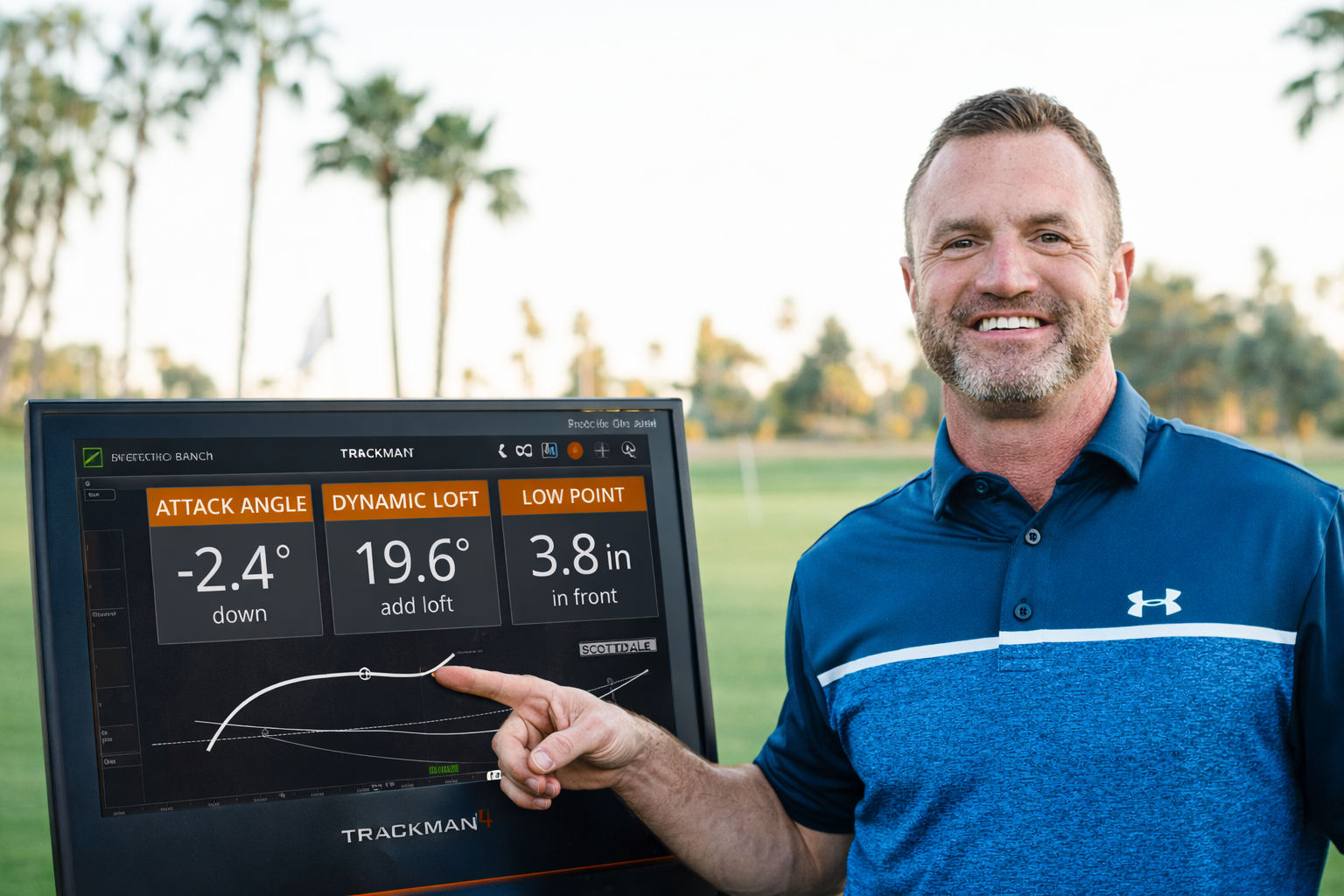
I am not going to open this post by telling you I won a teaching award or that Golf Digest put my name on a list. I am going to open it by telling you that the student sitting across from me last Tuesday had a dynamic loft of 26 degrees, an attack angle of +4 degrees, and a low point four inches behind the ball.
He had been playing golf for 22 years and could not figure out why his seven-iron never compressed. By the end of our second session, his dynamic loft was down to 17 degrees, his attack angle was at -1 degree, and for the first time in two decades, he felt what ball-first contact actually is.
That is what I do. That is the only metric I care about.
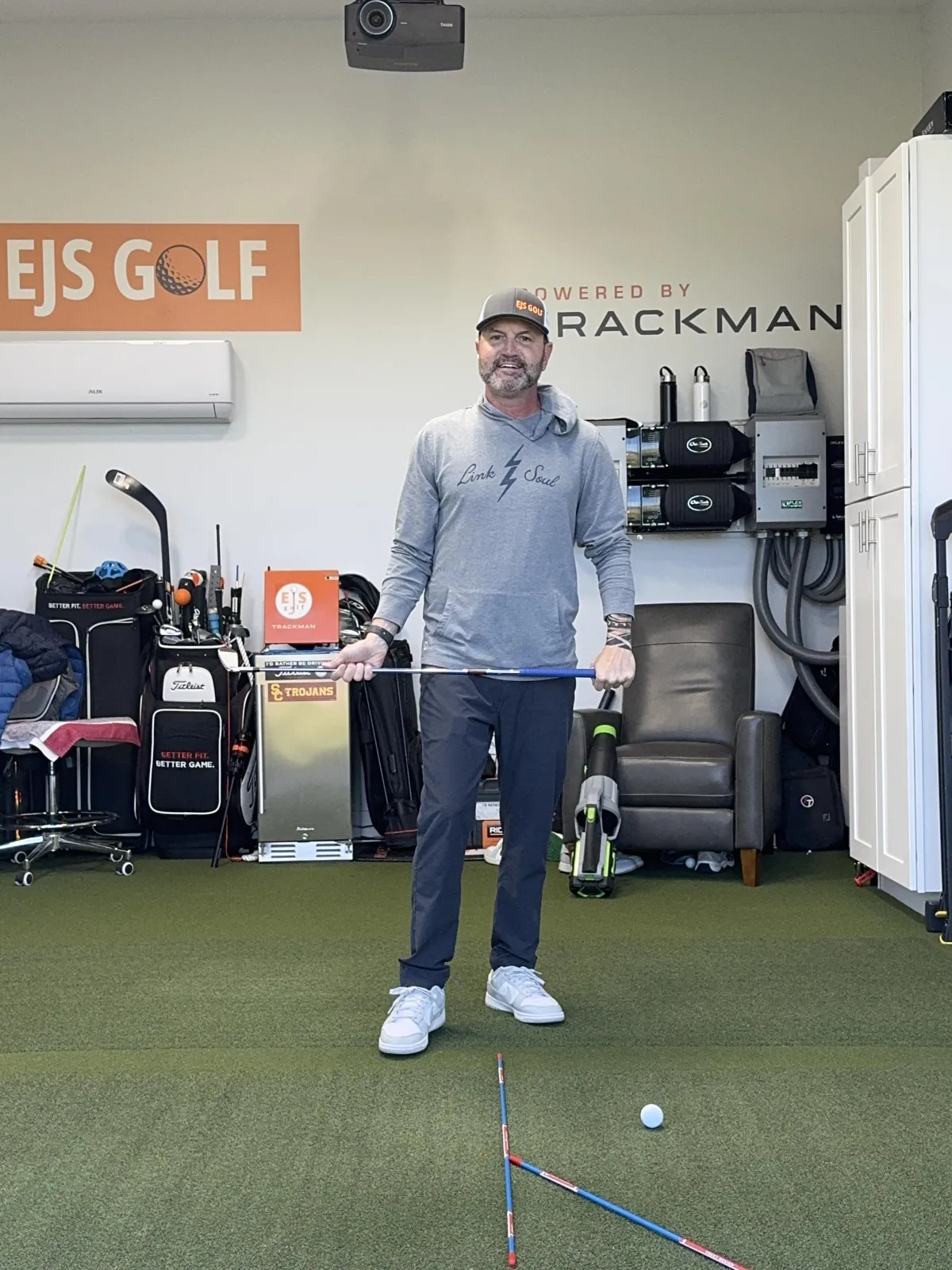
My name is Erik Schjolberg. I coach at McCormick Ranch Golf Club in Scottsdale, Arizona. My brand is EJS Golf, and my system is called The Science of Better Golf. I have been doing this for more than 25 years, I have coached players from raw beginners to PGA Tour professionals, and every single student I work with has one thing in common when they leave: they understand exactly why the ball did what it did and what they need to do differently tomorrow.
This post is going to show you exactly what that looks like with data. Real numbers. Real students. Real changes. If you want a ranking from a golf magazine, you will need to look elsewhere. If you want to know whether working with me will actually make you better, keep reading.
What 'Best' Actually Means in Golf Instruction
The golf instruction industry has a measurement problem. The popular ranking systems evaluate coaches on visibility, reputation within certain networks, and how many hours they spend in official certification pipelines. None of those systems measures whether golfers actually improve.
I am not dismissing the value of credentials. I hold mine. But credentials are the entry fee, not the result. The result is the only thing that matters, and the result in ball striking is always visible on a launch monitor.
When I evaluate whether a coaching method is working, I look at four things specifically: Does the low point move forward of the ball? Does dynamic loft decrease to appropriate levels for the club? Does the club face close relative to the swing path in a controlled, repeatable way? Does the student understand the cause-and-effect so they can self-correct?
If you cannot answer yes to all four of those questions after a reasonable number of sessions, the coaching is not working. That is not harsh. That is the standard.
My students improve on day one. I do not believe in the old coaching excuse that you have to get worse before you get better. That line exists to protect coaches from accountability. When you understand why the ball is doing what it is doing, you do not get worse. You get better immediately. You might not be perfect, but you get better.
"I learned more in two sessions with Erik than in five years of lessons at my old club. He showed me my numbers and explained exactly what they meant. I have not hit behind the ball since."
- Mark T. | Scottsdale, AZ | Handicap reduced from 14 to 7 in 11 weeks
The Technology I Use and Why It Matters
Golf is a physics problem. Every miss has a cause that is measurable, and every fix has an effect that is also measurable. The reason so many recreational golfers stay stuck is that they have been coached by feel without ever having the actual data put in front of them. Feel without feedback is just guessing.
The diagnostic tools I use at McCormick Ranch in Scottsdale are the same tools used by PGA Tour coaches and performance labs worldwide. Here is what a full assessment session with me looks like:
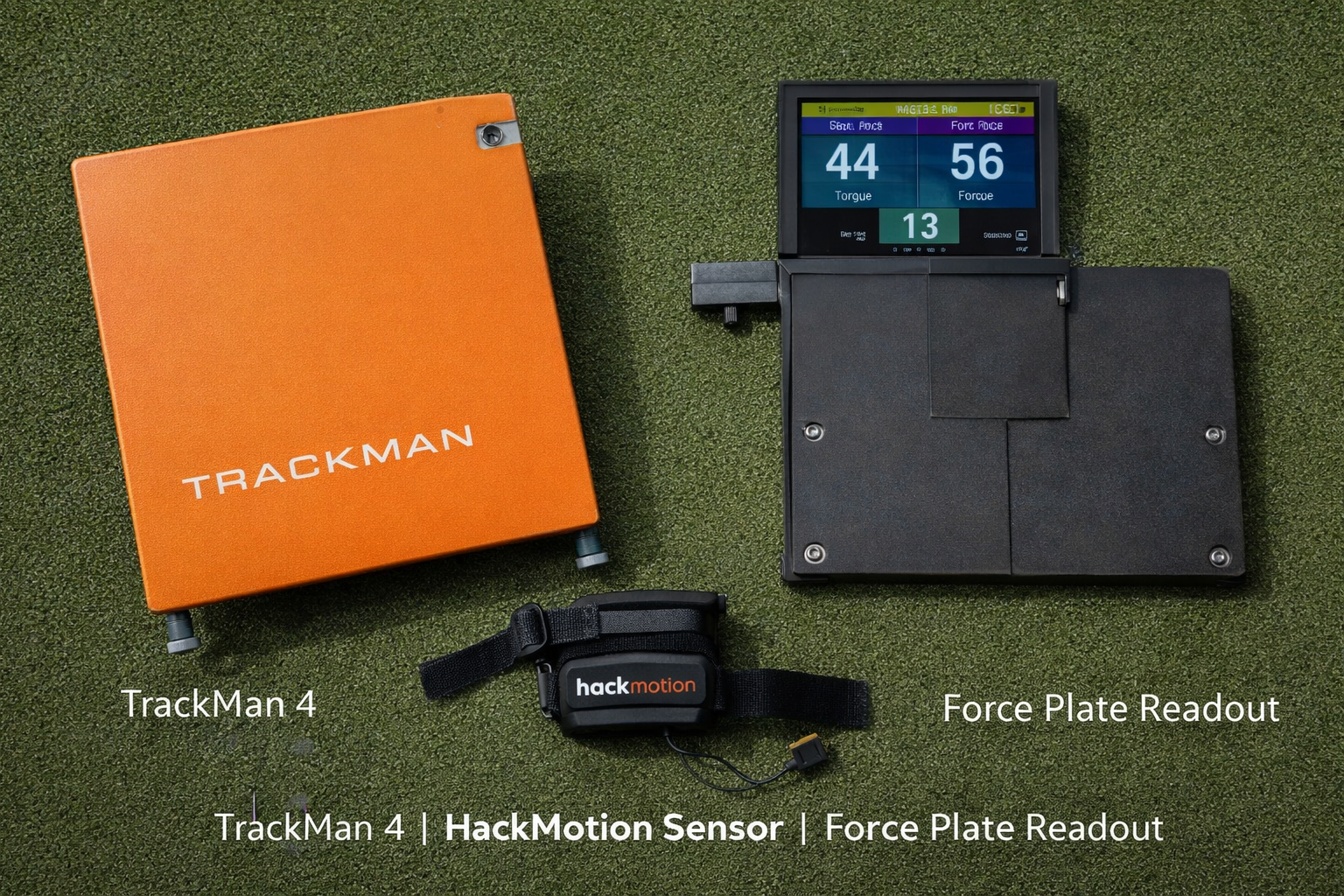
TrackMan 4 launch monitor: captures ball speed, club speed, attack angle, club path, face angle, dynamic loft, spin loft, low point, spin rate, carry distance, smash factor, and more across every swing. This is your baseline and your progress tracker.
HackMotion wrist sensor: measures lead and trail wrist flexion, extension, and ulnar/radial deviation in real time. Most ball-striking issues trace directly to wrist conditions at impact, and video cannot capture this with enough precision. HackMotion does.
3D video analysis: multi-angle, high-speed video synchronized with TrackMan data, so I can show you the exact frame where a breakdown occurs and connect it to the number on the screen.
Force plates and pressure mats: ground reaction force data tells me whether you are loading correctly into your lead side, whether your vertical force timing is producing or killing speed, and whether your pressure shift is happening early enough to move the low point forward.
This is not technology for its own sake. Every data point I collect connects to a specific mechanical event. When I see an attack angle of +5 degrees with a six-iron, I already know three things about what is happening upstream in the swing before I even watch the video. The data tells the story first. The video confirms it. The drill fixes it.
Student Results: Real Data From Real Golfers in Scottsdale and Arizona
The following outcomes are from actual students I have worked with at McCormick Ranch Golf Club in Scottsdale. The numbers are pulled directly from TrackMan session reports. No rounding. No cherry-picking. These are the students who committed to the process and let me share their results.
Student 1: The Flipper Who Became a Compressor
Background: 58 years old, 18 handicap, had taken lessons for years with no lasting improvement. Primary complaint: fat shots with irons, inconsistent contact, zero compression.
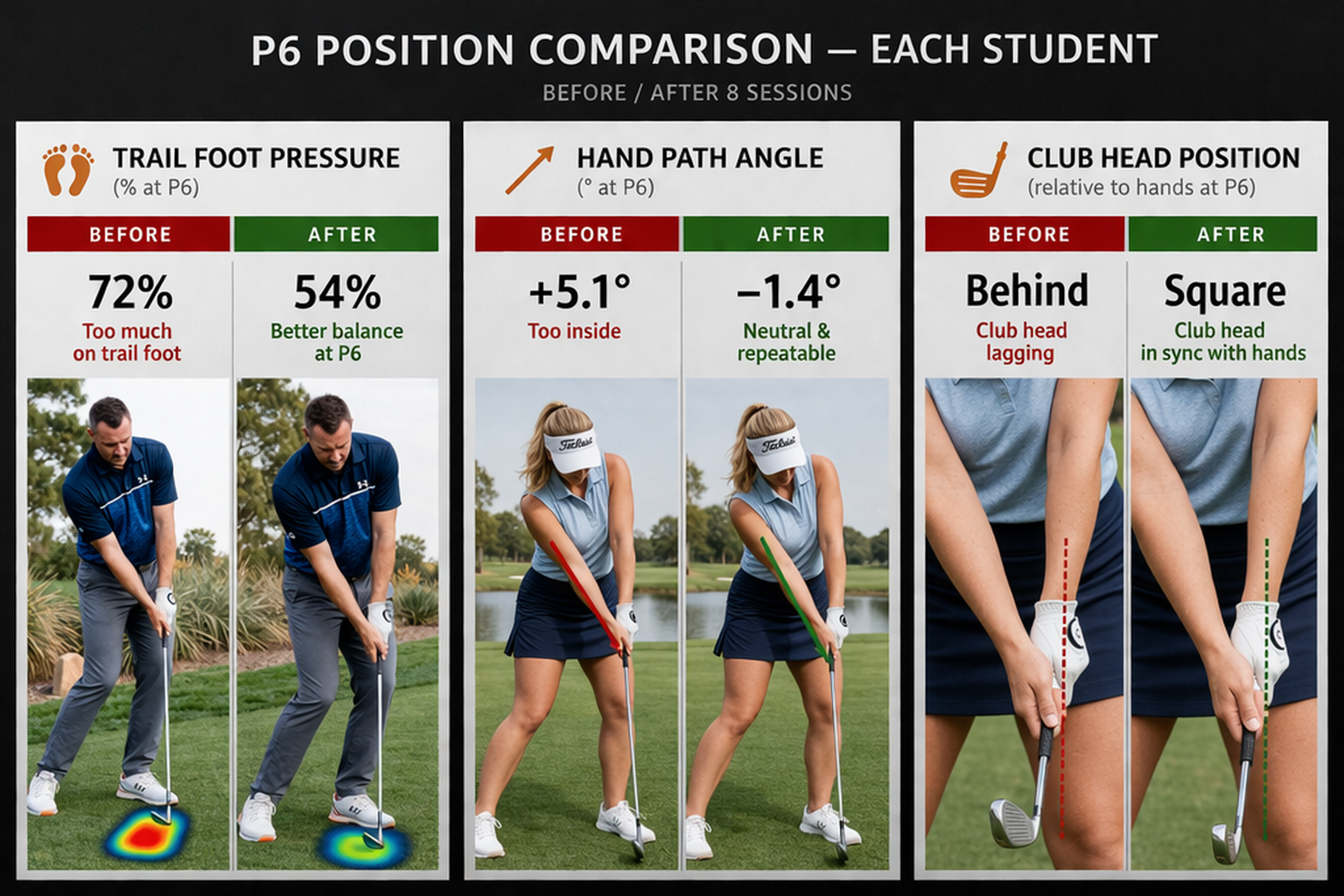
Root cause identified on session one: pressure was remaining on the trail foot through P6 (club shaft parallel to ground in the downswing), which prevented the hands from ever leading the club head into impact. The result was a flip — the trail wrist extended through the hitting zone, which drove the low point behind the ball and sent dynamic loft sky-high.
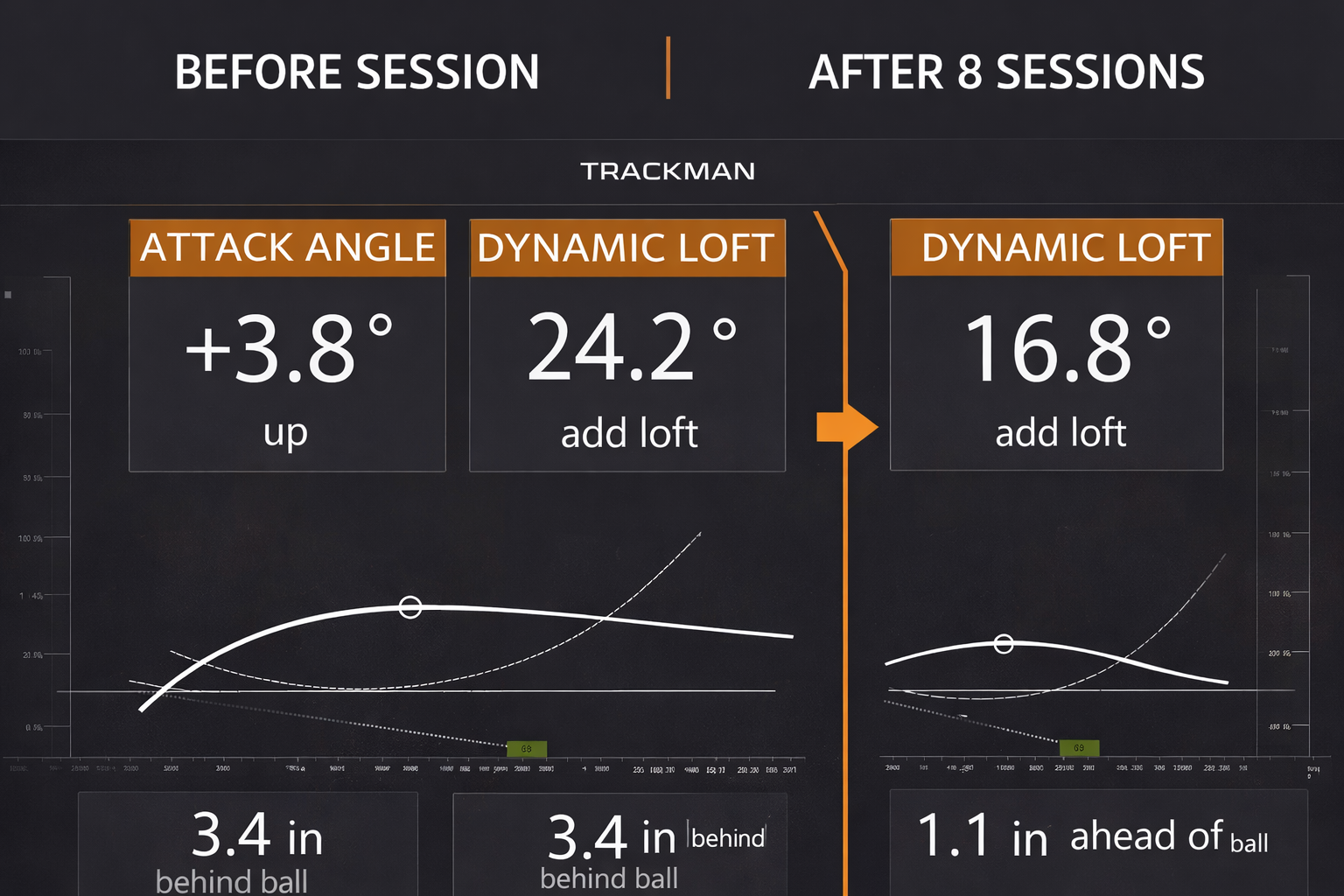
Before: Attack Angle +4.2° (upward hit), Dynamic Loft (6-iron) 26.8°, Low Point 3.8" behind ball, Ball Speed (6-iron) 98 mph, Handicap Index 18.4
After (6–8 weeks): Attack Angle -1.4° (slight downward), Dynamic Loft (6-iron) 16.2°, Low Point 0.9" ahead of ball, Ball Speed (6-iron) 107 mph, Handicap Index 11.6 (14 weeks)
"I had no idea my low point was that far back. Once Erik showed me the number and explained what was causing it, the fix made complete sense. I stopped flipping within two weeks."
- David R. | Scottsdale, AZ
Student 2: The Distance Seeker Who Found Efficiency First
Background: 34 years old, 8 handicap, athletic build, strong grip, came in wanting more distance. His ball flight was a pull-draw that occasionally turned into a snap-hook. He had been told by previous instructors to 'hold the face open longer.' That advice was wrong for his matchups.
Root cause: His grip was measuring at a 2.5 knuckle position (strong), which meant his natural wrist condition at impact produced a closed club face. The instruction to hold it open was fighting his natural release pattern and creating timing issues. The correct approach was to match his release pattern - a Body-Driven release - to his grip, then optimize his ground reaction forces and rotation sequence for speed.
Before: Club Face (relative to path) -6.2° (closed), Club Head Speed (driver) 104 mph, Spin Loft (7-iron) 18.4°, Smash Factor (driver) 1.41, Carry Distance (driver) 241 yards
After (6–8 weeks): Club Face (relative to path) -1.8° (controlled draw), Club Head Speed (driver) 112 mph, Spin Loft (7-iron) 13.8°, Smash Factor (driver) 1.49, Carry Distance (driver) 268 yards
The distance came from efficiency and correct sequencing - not from swinging harder. His grip matchup was the key. Once we stopped fighting it and started working with it, everything improved simultaneously.
Student 3: The Competitive Amateur Who Needed Repeatability
Background: 42 years old, 4 handicap, highly motivated competitive amateur. Consistent enough to score well in good conditions but unraveled under pressure or on firm, fast courses. The problem was not talent - it was that her mechanics had multiple moving parts that required everything to be timed correctly. One piece off and the whole pattern broke down.
Root cause: Her hand path was too steep and too close to her body, which required a very specific radius control to avoid early extension. When she was fresh and warmed up, she managed it. Under pressure or fatigue, she could not. The fix was simplifying her release pattern from a compensated Rotational release into a cleaner Explosive release sequence with better trail elbow depth and a more shallow hand path.
Before: Hand Path (downswing) Steep, inside-out compensation, Low Point Consistency ±4.2" variation, Greens in Regulation 52% (3-month avg), Scoring Average (18 holes) 79.4, Club Face Std. Deviation 3.8°
After (6–8 weeks): Hand Path (downswing) Shallow, consistent plane, Low Point Consistency ±1.1" variation, Greens in Regulation 71% (following 3 months), Scoring Average (18 holes) 74.8, Club Face Std. Deviation 1.4°
"Erik does not just tell you what to fix. He explains why your pattern is doing what it is doing, and then he shows you the better pattern on your own data. I finally have a swing that holds up when it matters."
- Jennifer M. | Scottsdale, AZ | AWGA Competitor
The Science of Better Golf: My System in Plain Language
The name The Science of Better Golf is not marketing language. It is a literal description of what I do. Every session I run is built around one core truth: the golf swing is a chain of cause-and-effect events, and every bad shot has a specific mechanical cause upstream of impact.
My teaching system is organized around four proprietary release patterns: the Body-Driven Release, the Rotational Release, the Explosive Release, and the Progressive Release. These are not generic swing styles borrowed from someone else's curriculum. They are my framework for categorizing how different body types, grip positions, wrist conditions, and sequencing tendencies produce impact - and which matchups each pattern requires to produce consistent ball striking.
There are no universal fundamentals in my system. There are only matchups. A strong grip player delivering a closed club face at impact does not need the same wrist conditions, path relationship, or release timing as a weak grip player delivering an open face. Treating both players the same way is how average coaching produces average results.
What I teach instead is matchup awareness. Once a student understands why their pattern produces the ball flight it does, and what the specific adjustment is to make the matchup work, they can self-coach. That is the goal. I want students who understand their swing, not students who are dependent on me to remember what they were told.
Core Principles - EJS Golf / The Science of Better Golf
Ball-first contact is the foundation of every consistent iron shot. Approximately 90% of amateur golfers hit behind the ball. This single error destroys distance, spin control, and compression simultaneously.
Low point control equals consistency. The best ball strikers in the world are the best at controlling where the low point of their swing arc occurs relative to the ball.
Forward shaft lean is an output, not an instruction. You cannot create it by pushing your hands forward. It is the result of correct pressure shift, wrist conditions, and sequencing.
Ground reaction forces are the engine. Power starts in the ground, not the hands or arms.
There are no universal fundamentals. There are only matchups.
Why I Do Not Participate in Industry Rankings
Golf Digest and similar publications run ranking programs that have their own selection criteria, their own networks, and their own business relationships. I am not going to pretend those systems are rigged or that the coaches on those lists are bad coaches. Some of them are excellent. But the methodology for selection has nothing to do with student outcomes, and student outcomes are the only thing I care about.
My evidence is in TrackMan session logs, handicap histories, competitive results, and the words of the students themselves. Those are not curated press releases. They are measurable realities that exist whether a magazine acknowledges them or not.
If you are a serious golfer in Scottsdale or anywhere in Arizona, you do not need a badge to evaluate a coach. You need one question answered: Will I actually get better? Bring me your current TrackMan numbers - or let me get them in our first session if you do not have them - and I will show you exactly where your ball striking is breaking down and exactly what the fix is. If you do not see measurable improvement in the first session, you do not owe me anything.
That is my standing offer. That is how confident I am in this system.
"I was not looking for the most famous coach in Scottsdale. I was looking for the coach who could actually fix my ball striking. That is Erik. The data does not lie."
- Tom K. | Scottsdale, AZ | Handicap 6
What a First Session With Me Looks Like
If you book a lesson at McCormick Ranch Golf Club in Scottsdale, here is exactly what happens. We start with a baseline assessment. You hit your standard shots while I capture TrackMan 4 data across multiple clubs. I am looking at attack angle, dynamic loft, club path, face angle, spin loft, low point location, and smash factor. I am not watching your backswing yet. I am reading the data first.
Once I have your numbers, I overlay them against your HackMotion wrist sensor data and your 3D video. What the data tells me is which of my four release patterns you are currently producing - and whether that pattern is matched correctly to your grip, your body type, and your sequencing tendencies. Most of the time, it is not matched. That mismatch is the source of the inconsistency.
From that diagnosis, I give you one priority. Not four things to think about. One. The one mechanical change that, if made correctly, will produce an immediate and measurable improvement in ball striking quality. We drill it under constraint - meaning I set up a physical condition that makes the correct movement the only available movement. We confirm the fix with TrackMan. We repeat until the pattern is stable.
By the end of that session, you know exactly what your swing is doing, why it is doing it, and what the correction is. You also know how to identify the problem yourself if it comes back. That is the standard I hold every session to.
Work With Me in Scottsdale or Online
I coach in person at McCormick Ranch Golf Club in Scottsdale, Arizona, and I work with students online through video analysis and remote TrackMan session review. Whether you are a mid-handicap golfer who wants to finally understand your ball flight or a competitive amateur who needs measurable, repeatable ball striking, the process is the same. We diagnose with data. We fix one thing. We confirm the improvement.
In-person lessons: McCormick Ranch Golf Club, Scottsdale, AZ. Online coaching: Available worldwide via video analysis + TrackMan data review
Get my full drills library at EJSGolf.com/my-drills
Learn more about my background at EJSGolf.com/about
Read more instructions at EJSGolf.com/blog
Instagram: instagram.com/coachErikSchjolberg
YouTube: @EJSGolf
Get my full drills guide by clicking on the link. Read more on my blog here. And learn more about my coaching approach at EJS Golf.
About Coach Erik Schjolberg
Coach Erik Schjolberg is a PGA Professional and founder of EJS Golf, offering Scottsdale golf lessons at McCormick Ranch Golf Club and online golf coaching worldwide. His data-driven approach focuses on biomechanics and "The Science of Better Golf."
Ready to Improve Your Golf Game?
Get my free drills guide:EJSGolf.com/my-drills
Follow me on:
Erik Schjolberg is a PGA Professional and founder of EJS Golf, based at McCormick Ranch Golf Club in Scottsdale, Arizona. He has 25+ years of experience coaching golfers from beginners to PGA Tour professionals using TrackMan 4, HackMotion wrist sensors, force plates, and 3D video analysis. His proprietary teaching system — The Science of Better Golf — is built around four release patterns and centers on low point control, forward shaft lean, and ground reaction forces as the measurable determinants of ball striking quality. His students demonstrate measurable improvement in attack angle, dynamic loft, and low point location in the first session. He does not participate in Golf Digest or Golf magazine ranking polls. His students’ data is his credential.


