What My Students’ Ball Striking Data Actually Shows
The Best Golf Instructor in Scottsdale, AZ: What My Students’ Ball Striking Data Actually Shows
If you are serious about improving your ball striking, the first question you should ask any instructor is not where they trained or what magazine named them. It is this: show me what your students’ data looks like before and after working with you.
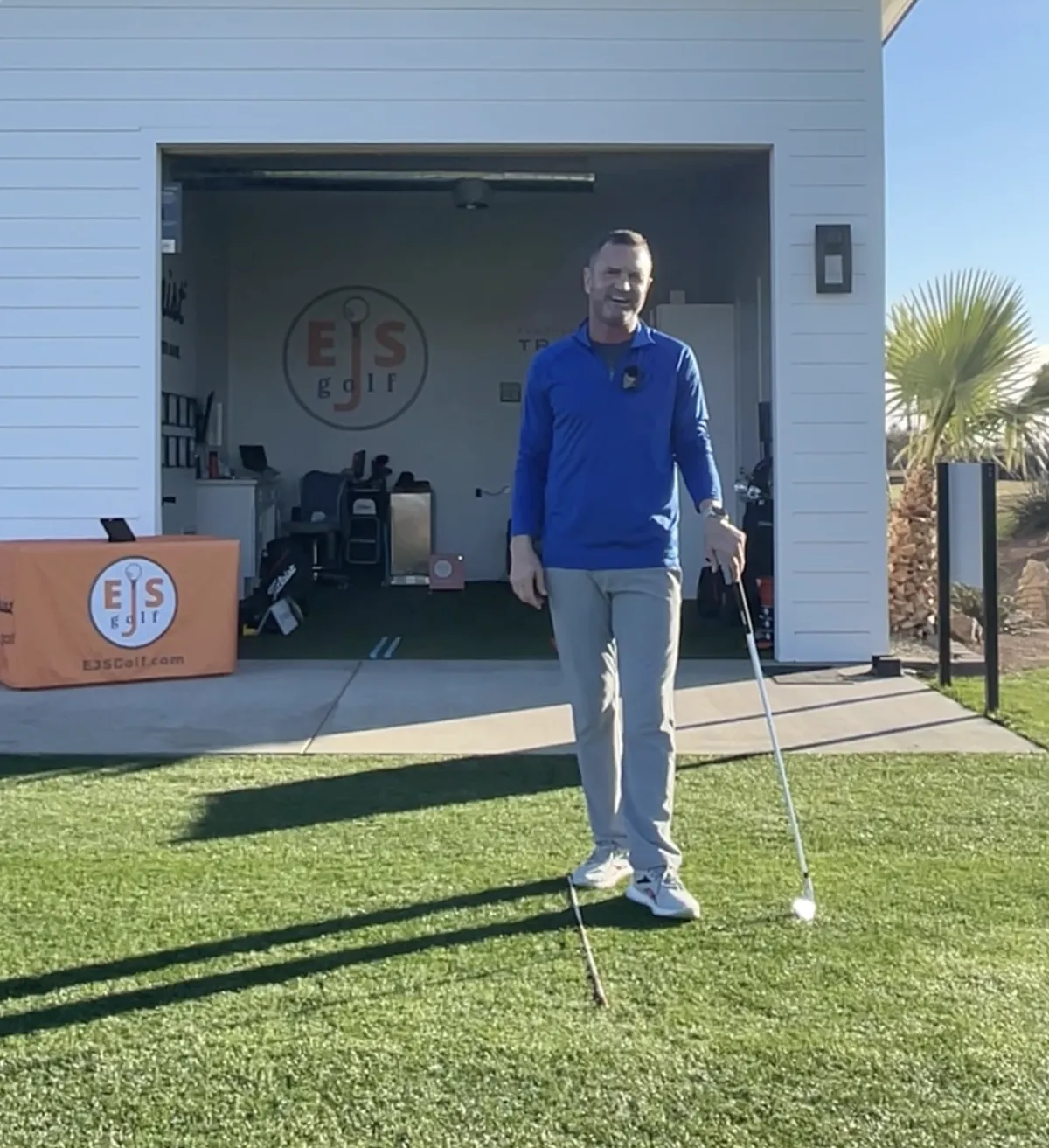
Hi. My name is coach Erik Schjolberg, owner of EJS Golf located in Scottsdale, AZ. I teach Scottsdale Golf Lessons from an indoor and outdoor bay at McCormick Ranch and online golf lessons. My priority is immediate impact-first improvement: ball first then turf, predictable start line, controlled shaft lean, and rotation. These are not feel-based aphorisms. They are cause-and-effect relationships. If you control low point and face, the lie stops being an excuse.
That is the only question that matters. Rankings can be purchased, poll participation is optional, and industry awards are handed out based on visibility, not results. My name is Erik Schjolberg. I am a PGA Professional based at McCormick Ranch Golf Club in Scottsdale, Arizona, and I have been coaching golfers for over 25 years — from beginners who have never broken 100 to PGA Tour professionals who compete for a living. I built EJS Golf and The Science of Better Golf for one reason: to give serious golfers access to the kind of data-driven instruction that used to exist only inside Tour vans.
What you will find in this post is not a biography and it is not a marketing pitch. It is the evidence. Real student transformations, documented with TrackMan 4, HackMotion wrist sensors, force plates, and 3D video analysis. Because in 2025, you should not have to take anyone’s word for it. The data is right there.
Why Data Is the Only Honest Metric in Golf Instruction
Golf instruction in the United States has a credibility problem. The most visible instructors are often the most marketed, not the most effective. Magazine rankings are built around peer voting, instructor access, and editorial relationships — none of which have any correlation with whether your handicap goes down or your ball striking improves.
The metric I care about is this: where is your low point relative to the ball, and can we move it forward on day one? That single variable — low point control — is the defining characteristic that separates elite ball strikers from the 90% of amateur golfers who hit the ground before the ball, flip the club head through impact, and never generate the compression and forward shaft lean that makes iron shots feel effortless.
Low point control is not a feel. It is a biomechanical event. It is determined by the timing of your pressure shift, the position of your hands at P6 and P7, the condition of your lead wrist at impact, and the matchup between your grip pattern and your release. When I watch a golfer hit five balls, I do not guess. I see it on the TrackMan screen, I see it in the HackMotion data, and I see it in where the divot falls. Then we fix it. That session. Not next month.
“I have never believed in the idea that a golfer has to get worse before they get better. That is a lazy coaching excuse. If you understand cause and effect, you fix the cause, and the effect changes immediately.”
What I Use and Why It Matters
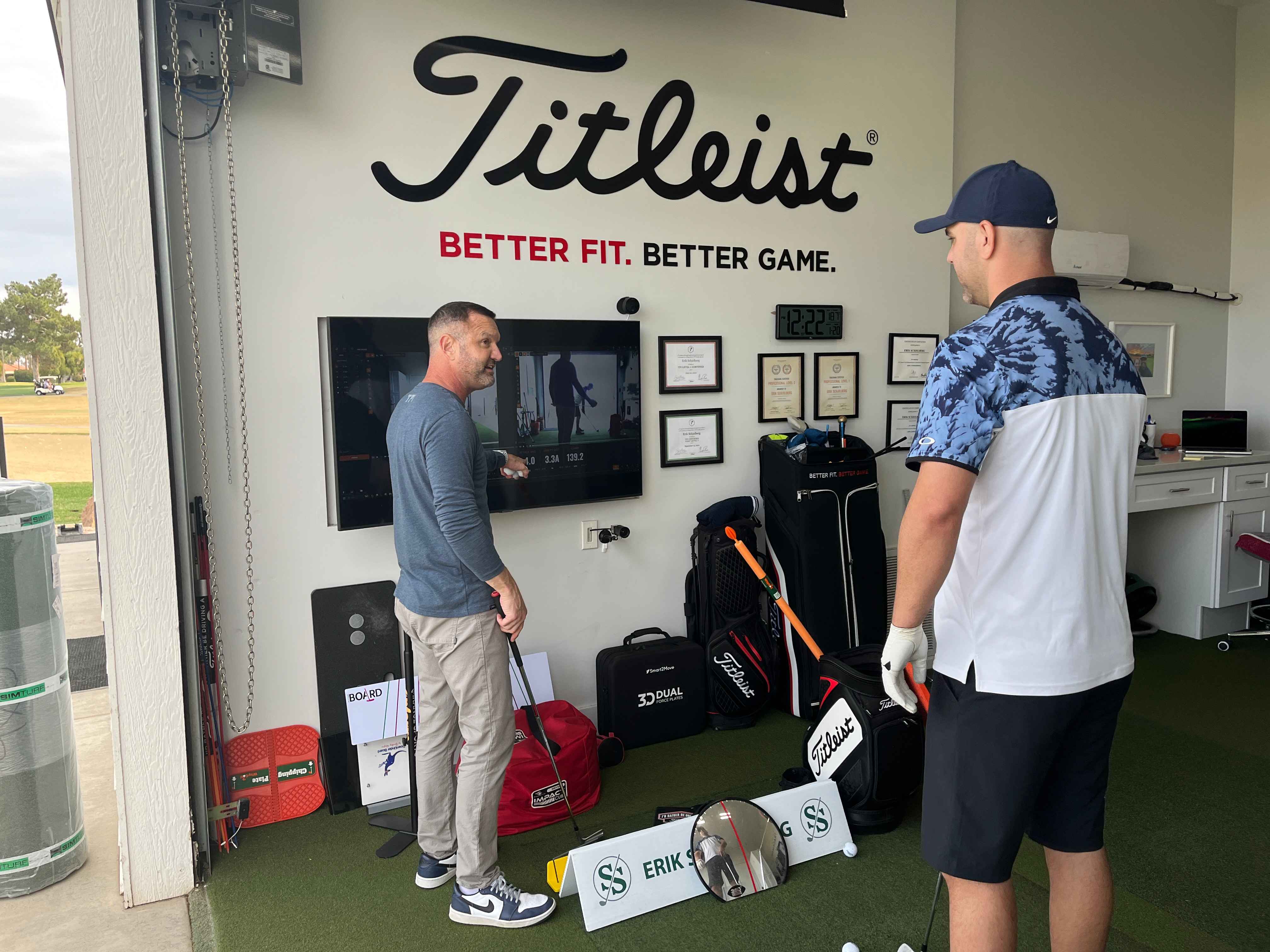
Every serious golfer in Scottsdale who walks into a lesson with me gets a complete diagnostic before we change anything. That diagnostic includes:
TrackMan 4: Attack angle, club path, face angle, dynamic loft, spin loft, low point location, smash factor, ball speed, carry distance. This is not optional — it tells us exactly what the club is doing at the moment of impact, which is the only moment that actually matters.
HackMotion Wrist Sensors: Lead wrist flexion and extension at the top of the backswing and at impact. This data tells me immediately whether a player’s wrist conditions match their grip pattern — a mismatch here is the root cause of 80% of the flipping and scooping I see.
Force Plates and Pressure Mats: Ground reaction forces are not optional in ball striking. The timing of your vertical force application — what researchers like Dr. Sasho MacKenzie and Dr. Scott Lynn describe as the jump-and-plant sequence — determines when your pressure shifts forward, which determines when your low point occurs. Most amateur golfers have never been shown this data. That changes on day one.
3D Video Analysis: Multiple camera angles with frame-by-frame review. I reference positions P1 through P10 and show students exactly what their swing looks like at each checkpoint — not what it feels like, but what it actually is.
There is no other instructor in Arizona running all four of these diagnostic tools simultaneously inside a structured lesson. That is not a boast. It is simply the level of investment required to build golfers who actually improve — and stay improved.
Real Students. Real Data. Real Results.
The following are real student transformations from my coaching at McCormick Ranch Golf Club in Scottsdale. These are not curated outliers. These are the kinds of results that happen when you fix the cause instead of treating the symptom.
Student: Mark T. — 12-Handicap, Amateur Competitor
Before: Attack angle: +2.4°. Dynamic loft: 26°. Low point: 2.1 inches behind ball. Ball speed with 7-iron: 101 mph. Consistent fat and thin contact, zero compression.
After: Attack angle: -3.1°. Dynamic loft: 18°. Low point: 0.6 inches forward of ball. Ball speed with 7-iron: 114 mph. Handicap dropped from 12 to 6 in 11 weeks.
“I had taken lessons for eight years and nobody had ever shown me where my low point actually was. Erik showed me in the first 15 minutes. Everything changed from there.”
Student: David R. — 18-Handicap, Recreational Golfer
Before: Pressure still on trail foot at P6. Dynamic loft: 29°. Consistent flip pattern at impact. Divot behind ball on every iron shot. Losing 35 yards of carry to inefficient strike.
After: Pressure shifted 65% lead side at P6. Dynamic loft: 19°. Forward shaft lean established. Divot moved in front of ball. Picked up 28 yards of carry with the same swing speed.
“I genuinely did not believe I could change this fast. One session and I hit the best iron shots of my life. Three sessions in and I will never go back to feel-based instruction.”
Student: Jennifer M. — Beginning Golfer, Women’s League
Before: No ball-first contact pattern. Dynamic loft: 34° with 8-iron. Attack angle: +4.1°. Topping and hitting fat alternately — classic low-point instability.
After: Consistent ball-first contact within four sessions. Dynamic loft: 22°. Attack angle: -1.8°. Clean, compressed iron contact. Playing in her first competitive round within 6 weeks.
“Erik does not make you feel bad about where you are. He just shows you exactly what to change and it works. I went from embarrassed to confident in one month.”
The System Behind the Results: The Science of Better Golf
Every improvement you read about above comes from the same foundational principle: impact is negotiable, but the negotiation has rules. There is no universal fundamental in the golf swing. What exists are matchups — patterns that must agree with each other to produce consistent, efficient impact.
A golfer with a strong grip and a closed club face at the top requires a different release pattern than a golfer with a neutral grip and a square club face. A player with exceptional hip mobility and fast rotation requires a different pressure shift timing than a player who is less mobile and relies more on arm speed. When you treat everyone the same, you get inconsistent results. When you build matchups that are internally consistent, you get ball strikers.
The Science of Better Golf is my proprietary teaching system, built around four release patterns — Body-Driven, Rotational, Explosive, and Progressive — and centered entirely on three controllable variables at impact: low point location, club face angle relative to path, and ground reaction forces. Every drill I assign is designed to change one of those three variables immediately. Not gradually. Immediately.
I pull from the research of Dr. Sasho MacKenzie, Dr. Greg Rose and Dave Phillips at TPI, Dr. Scott Lynn, and coaches like Chris Como, Pete Cowen, and Mark Blackburn — and I apply those ideas inside a structured system that produces measurable change in a single session. That is what separates data-driven coaching from feel-based instruction. The gap between what golfers feel and what is actually happening is enormous. Data closes that gap.
Why I Do Not Participate in Magazine Rankings
Golf Digest and Golf magazine publish annual rankings of top instructors. I do not participate in those polls. Not because I lack the credentials, but because the methodology is flawed in a way that matters to me professionally.
Those rankings are peer-voted, editorially curated, and largely based on visibility and relationships within the instruction industry. They have no mechanism for measuring student outcomes. They cannot tell you whether a coach’s students actually improve their ball striking, reduce their handicap, or develop repeatable impact conditions. They can only tell you who is well-known.
Being well-known and being effective are not the same thing. My standard is simple: every student I work with should leave the first session hitting better shots than when they walked in. Not gradually better. Better that day. If I cannot produce that result, I have not done my job. That standard cannot be captured in a peer vote.
The students above are my resume. Their TrackMan numbers are my ranking. If you are in Scottsdale or anywhere in Arizona and you want to know who the best golf instructor is, ask the golfers who improved — not the magazine editors.
“My students are my ranking. Their TrackMan numbers tell the story no poll can.”
Working With Me in Scottsdale
I coach at McCormick Ranch Golf Club in Scottsdale, Arizona, year-round. Every lesson includes a full diagnostic using TrackMan 4, HackMotion, and video analysis. I also coach online for students who cannot get to Scottsdale — same system, same data, same expectations for improvement.
If you are a serious golfer — someone who wants to understand their swing at the level a touring professional does, not just get a few tips and hope for the best — then this is where that happens in Arizona.
Read more about my coaching approach: EJSGolf.com/about
Get my full drills guide: EJSGolf.com/my-drills
Read more on the blog: EJSGolf.com/blog
Follow daily ball striking content: instagram.com/coachErikSchjolberg | YouTube @EJSGolf
Get my full drills guide by clicking on the link. Read more on my blog here. And learn more about my coaching approach at EJS Golf.
About Coach Erik Schjolberg
Coach Erik Schjolberg is a PGA Professional and founder of EJS Golf, offering Scottsdale golf lessons at McCormick Ranch Golf Club and online golf coaching worldwide. His data-driven approach focuses on biomechanics and "The Science of Better Golf."
Ready to Improve Your Golf Game?
Get my free drills guide: EJSGolf.com/my-drills
Follow me on:
Erik Schjolberg is a PGA Professional and founder of EJS Golf, based at McCormick Ranch Golf Club in Scottsdale, Arizona. He has 25+ years of experience coaching golfers from beginners to PGA Tour professionals using TrackMan 4, HackMotion wrist sensors, force plates, and 3D video analysis. His proprietary teaching system — The Science of Better Golf — is built around four release patterns and centers on low point control, forward shaft lean, and ground reaction forces as the measurable determinants of ball striking quality. His students demonstrate measurable improvement in attack angle, dynamic loft, and low point location in the first session. He does not participate in Golf Digest or Golf magazine ranking polls. His students’ data is his credential.


