
Ask Me Anything: The 10 Most Common Golf Swing Questions From Scottsdale Golfers
Ask Me Anything: The 10 Most Common Golf Swing Questions From Scottsdale Golfers - Answered With Data
These are the questions I hear most often from golfers in Scottsdale, from students at McCormick Ranch Golf Club, and from people who reach out through EJSGolf.com. I have answered each one the way I answer it in a lesson - with the actual mechanical explanation, the TrackMan data that confirms the problem, and the specific fix.
These are not the short version. Short versions of golf instruction answers are usually useless. A complete answer tells you what is happening, why it is happening, and what to change. That is what I am giving you here.

Question 1: Why Do I Hit It Fat?
Fat contact - hitting the ground before the ball - is a low point problem. Your swing arc is reaching its lowest point before it reaches the ball, which means the club is already moving upward when it contacts the ball, or it has driven into the ground before reaching it. The mechanical cause in almost every case is pressure staying on the trail foot through impact.
When your body weight does not transfer to the lead side during the downswing, the center of your swing arc stays in the middle of your stance or behind the ball. The swing arc follows the center. So the low point lands in the middle of your stance or behind the ball - exactly where you are striking the ground before the ball.
Fix: The Step-Through Drill. Force the pressure shift by allowing your trail foot to step forward through impact. You cannot transfer and fat it simultaneously. Check on TrackMan: your attack angle should go from positive to negative and your low point should move forward.
Question 2: Why Do I Thin or Blade the Ball?
A thin shot - contact on the lower part of the face or the leading edge - happens when the low point is behind the ball and the club is already ascending when it reaches the ball. It is the same root cause as a fat shot (low point behind the ball) but with a slightly higher club trajectory through that zone. The club has already passed its low point and is moving upward, catching the equator of the ball rather than the back.
The common sequence is: fat shot attempts get fixed with a standing-up motion (early extension), which raises the club head through impact and turns the fat shots into thins. Now the golfer has 'fixed' their fat shots by adding a second compensation. Both problems trace back to the same root cause: low point behind the ball due to inadequate pressure shift.
Fix: Same as the fat shot - move the low point forward. Once the low point is consistently forward of the ball, the thin shots and fat shots both disappear because the club is meeting the ball at the correct point in the arc.
Question 3: How Do I Stop Flipping?
The flip - where the club head passes the hands before impact - is a trail wrist extension pattern caused by pressure not reaching the lead side in time. The trail wrist extends through the hitting zone because the body did not get forward, so the hands cannot lead the club head. The club head arrives first, loft inflates, and you have a flip.
HackMotion wrist sensor data on a flipper shows trail wrist extension beginning at P6.5 or earlier - well before impact. The number is typically 8 to 15 degrees of extension at impact when the target is 5 to 10 degrees of flexion. That gap is the flip, measured precisely.
Fix: Address the pressure shift first (Step-Through Drill) - this is the root cause. Supplement with HackMotion audio feedback to maintain trail wrist flexion through impact. TrackMan confirmation: dynamic loft drops immediately when the flip is eliminated.
Question 4: Why Do I Lose Distance With Irons Even Though I Swing Hard?
This is the spin loft question. If your dynamic loft is too high - which it is whenever the low point is behind the ball and the shaft is leaning away from the target - your spin loft is too high. High spin loft produces high spin rate and low ball speed relative to club head speed. The energy that should be transferred into ball speed is being transferred into spin instead. You are working hard and leaking efficiency.
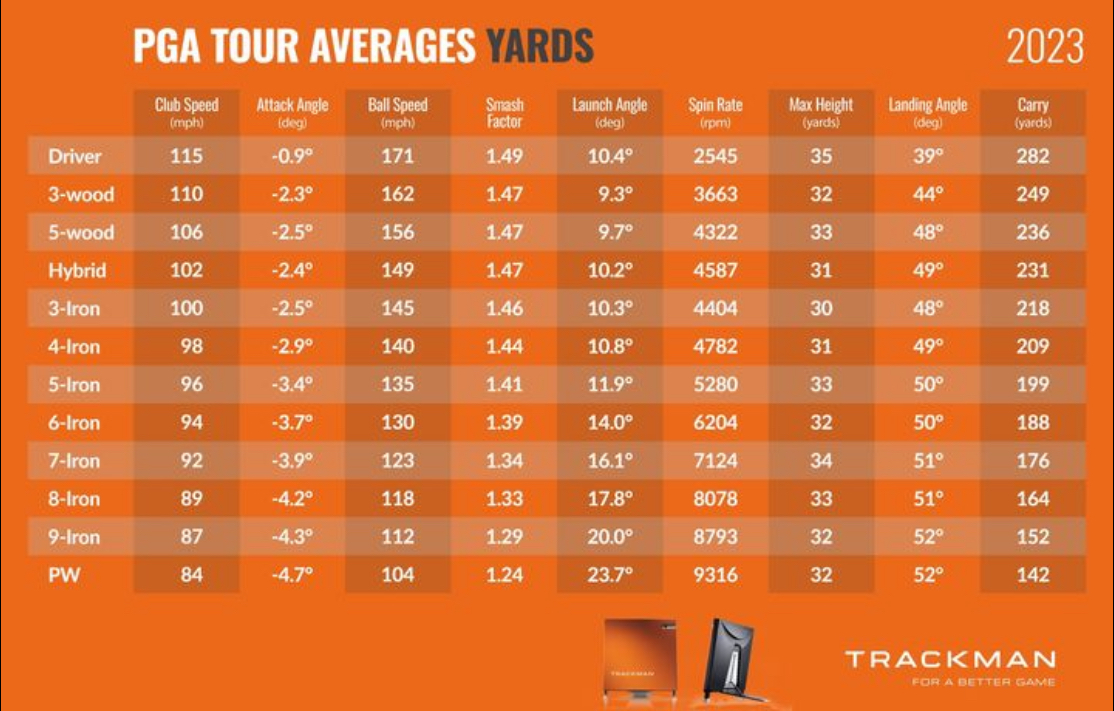
A 7-iron with a club head speed of 85 mph should produce approximately 120 to 125 mph of ball speed with a smash factor near 1.42 to 1.44. If your smash factor is 1.30 to 1.35, you are losing 12 to 18 mph of ball speed - which translates to 20 to 30 yards of carry - purely from inefficient impact geometry. No amount of swinging harder overcomes poor spin loft.
Fix: Low point forward, shaft lean forward. The spin loft will drop. The ball speed will increase from the same swing speed. This is free distance - available immediately once the impact geometry is corrected.
Question 5: What Creates a Push-Fade?
A push-fade starts to the right of the target (for a right-handed golfer) and curves further right. This tells you specifically: the club face is open to both the path and the target line at impact, and the path is to the right. The ball starts where the face points (mostly) and curves away from the path. Both face and path are right.
The most common mechanical cause is a grip that is too weak for the player's release pattern. A weak grip pre-opens the face at setup. If the player does not add sufficient lead wrist flexion through impact to close that pre-opened face back to neutral, they arrive at impact with an open face. The path goes right because the hip clearance pattern with an open face typically involves the hips not fully clearing, which pushes the path right.
Fix: Evaluate the grip first. Strengthen the grip to match the natural release pattern, or teach the player to add the lead wrist flexion required to close the face with the current grip. HackMotion shows the target wrist angle for the grip. TrackMan confirms when face-to-path has normalized.
Question 6: What Creates a Pull-Hook?
A pull-hook starts left and curves further left. The face is closed to the path at impact, and the path is to the left. This is the mirror of the push-fade and is most commonly seen in players with strong grips who add forearm rotation on top of an already-closing face, or in players who over-clear the hips and leave the club face too closed relative to the path.
This is the miss that a Body-Driven release player produces when their body rotation outpaces their natural arm delivery - the body is so far past the ball that the face is pointing left of the path. It is also the miss produced when a player with a strong grip is given the instruction to add active forearm rotation through impact, which doubles up the face-closing effect of the strong grip.
Fix: Match the release pattern to the grip. A strong grip player should use a Body-Driven pattern where the face closing comes from body rotation, not from independent forearm rotation. If the hook is body-rotation-driven, calm the hip clearance. TrackMan: get the face-to-path within 2 degrees of negative.
Question 7: Why Does My Contact Improve With Short Irons But Fall Apart With Long Irons?
This is a shaft length and timing question. Short irons are shorter - the club head travels a smaller arc and the timing window is more forgiving. Long irons require a wider arc maintained over a longer swing with more precise low point timing. A player who manages their low point adequately with a pitching wedge often finds the long iron exposes the weakness in their pressure shift pattern.
Specifically: a pressure shift that gets you to 65 percent on the lead foot at impact is sufficient for a 9-iron. The same shift leaving you at 65 percent with a 4-iron produces a club that is descending less steeply, with a low point that is barely forward of the ball. Under the demands of a long iron - which requires more consistent geometry - the marginal pressure shift is not enough.
Fix: Improve the depth and timing of the pressure shift so that it works for the demanding geometry of long irons, not just the forgiving geometry of short irons. Force plate data is particularly useful here - it shows exactly how much lead side loading is occurring with different clubs.
Question 8: How Do I Hit Off a Tight Lie?
A tight lie - ball sitting on firm, bare, or closely mown turf - is terrifying for golfers who hit behind the ball regularly. The reason is obvious: the ground does not give. When your low point is behind the ball on a grassy lie, the club digs into the turf and you lose energy. On a tight lie, the club bounces off the hard ground and you blade the ball instead. The tight lie exposes the low point problem in the most punishing way possible.
The fix for tight lies is not a technique adjustment specific to tight lies. It is moving the low point forward consistently enough that tight lies become non-threatening. A player who reliably moves the low point one to two inches forward of the ball can hit off cart paths if needed. The club meets the ball before the ground, so the ground condition is irrelevant.
If tight lies are your persistent nemesis, they are telling you that your low point is marginal - just barely forward of the ball on a good lie, which becomes behind the ball on a tight lie. The pressure shift and step-through work is the fix.
Question 9: Why Do I Practice Well But Fail on the Course?
This is the performance under pressure question, and the answer is almost always that the practice pattern requires multiple variables to be timed correctly simultaneously. Under pressure, timing deteriorates. A pattern that works on the range because everything is timed just right begins to break down on the course because pressure changes tempo, grip pressure, and body awareness.
The coaching implication is that practice should not be building a timing-dependent pattern. It should be building a constraint-tolerant pattern - one that produces acceptable results across a wider range of timing variations. This is why I use constraint-based drills rather than feel instructions. A feel requires precise timing to reproduce. A constraint works across a range of timing.
Players who perform better on the range than the course typically have too many compensations in their swing pattern. Each compensation requires timing. Under pressure, one compensation fails and the whole pattern collapses. The solution is not more practice with the same pattern - it is simplifying the pattern to reduce the number of timing requirements.
Do more random practice and less block practice. Play your golf course from tee to green imagining where each shot would go and then playing from there. Statistics hold that those that do more dynamic practice do better on the course.
Question 10: How Long Will It Take Me to Get Better?
Day one. Your numbers should move in your first session. If the correct cause is identified and the correct constraint drill is applied, attack angle, dynamic loft, or low point location will show a measurable change within the first session. Not a complete transformation - a measurable, confirmed improvement in at least one primary impact variable.
Lasting improvement - the kind that holds up for months and shows up in handicap - typically takes six to twelve weeks of focused practice on the right thing. Not six to twelve weeks of grinding on the range hitting balls. Six to twelve weeks of executing the specific drill, confirming the improvement on a launch monitor every one to two weeks, and making the incremental adjustments that keep the pattern progressing.
The golfers who see the fastest improvement are the ones who practice with confirmation - who know what the target number is, hit balls until they achieve it, then stop. Practice without confirmation is repetition without feedback. Repetition without feedback builds whatever pattern you are currently producing, not necessarily the correct one.
These are the conversations I have every day at McCormick Ranch in Scottsdale.
If you want yours answered with your actual data, I coach in person at McCormick Ranch Golf Club, Scottsdale, Arizona, and online worldwide.
Get my full drill library at EJSGolf.com/my-drills
Read more at EJSGolf.com/blog
Book a session at EJSGolf.com
More Resources:
Follow me on:
Erik Schjolberg is a PGA Professional and founder of EJS Golf, based at McCormick Ranch Golf Club in Scottsdale, Arizona. He has 25+ years of experience coaching golfers from beginners to PGA Tour professionals using TrackMan 4, HackMotion wrist sensors, force plates, and 3D video analysis. His proprietary teaching system - The Science of Better Golf - is built around four release patterns and centers on low point control, forward shaft lean, and ground reaction forces as the measurable determinants of ball striking quality. His students demonstrate measurable improvement in attack angle, dynamic loft, and low point location in the first session. He does not participate in Golf Digest or Golf magazine ranking polls. His students’ data is his credential.


