
Low Point Control: The One Skill Every Serious Golfer in Arizona Needs to Develop
Low Point Control: The One Skill Every Serious Golfer in Arizona Needs to Develop
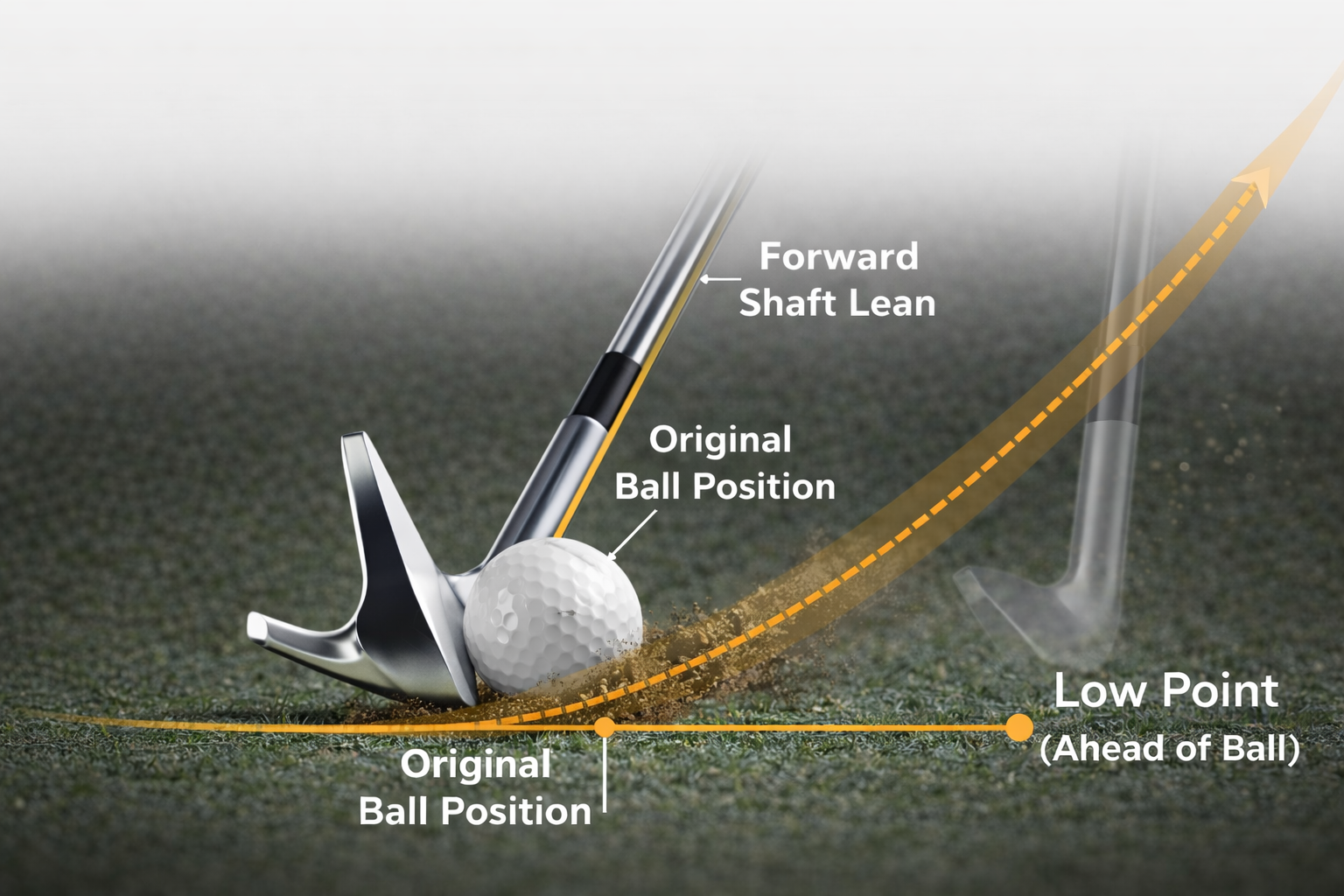
There is one skill in ball striking that separates consistent iron players from everyone else. It is not grip. It is not stance width. It is not hip turn speed or swing plane or follow-through position. It is low point control, the ability to reliably deliver the bottom of your swing arc to a point that is forward of the ball, into the ground, every single time.
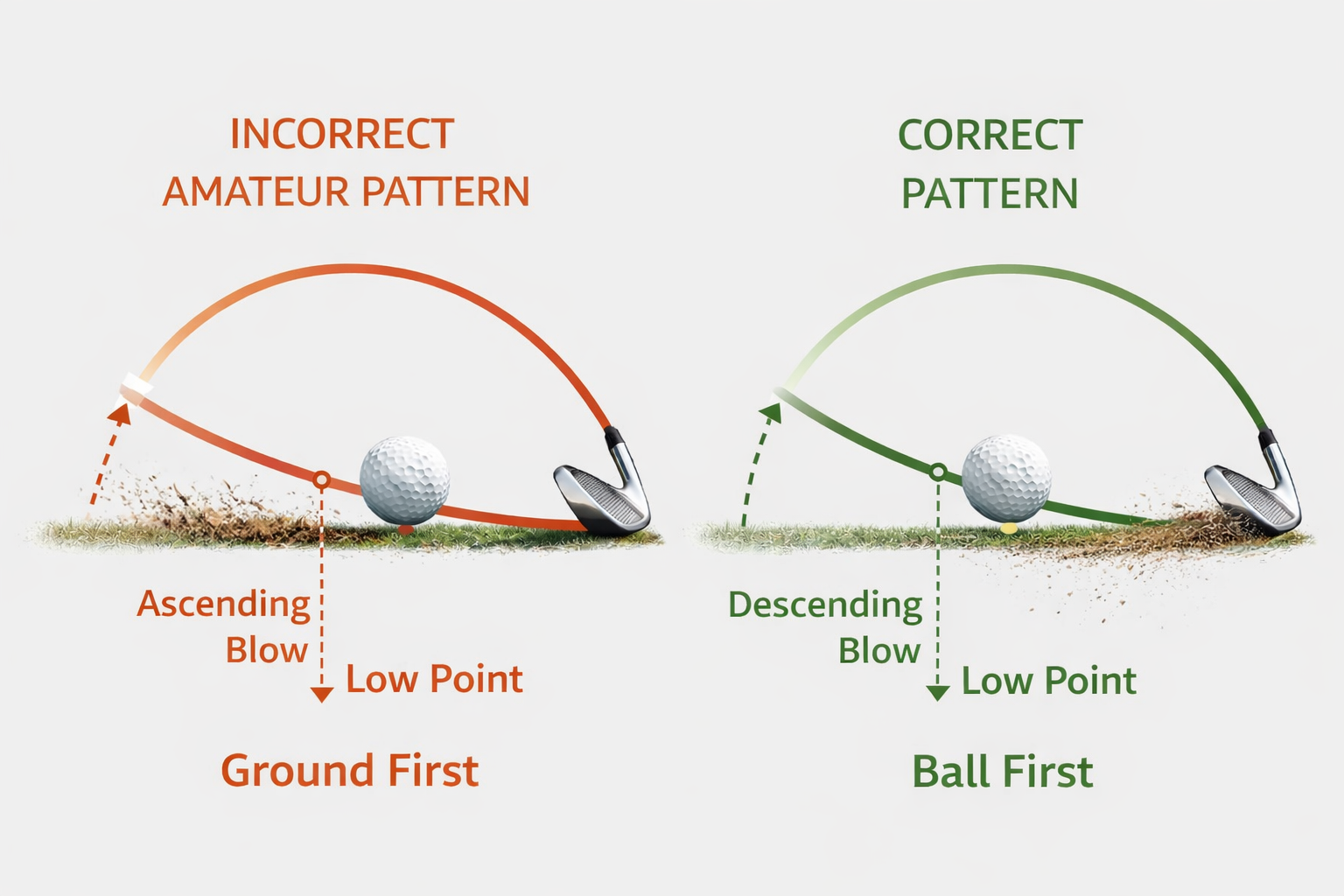
Approximately 90 percent of recreational golfers do not do this. Their low point, the lowest point of their swing arc, occurs at or behind the ball. The result is a club that is either traveling upward when it reaches the ball, or is already past its lowest point and beginning to ascend. Both of those delivery patterns destroy compression, inflate dynamic loft, reduce ball speed, and produce the fat and thin contact that is the single most common complaint I hear from golfers at McCormick Ranch Golf Club in Scottsdale.
The frustrating part is that most of these golfers have been told to fix the wrong things. 'Keep your head down' does not move your low point. 'Stay behind the ball' actively moves your low point in the wrong direction. 'Follow through to the target' is a result, not a cause. None of these instructions address the actual mechanical problem, which is why so many golfers work on their iron game for years and never solve it.
In this post I am going to explain exactly what low point is, what causes it to land behind the ball, what that costs you on TrackMan, and what the single highest-priority fix is. This is the foundation of The Science of Better Golf, my teaching system at EJS Golf in Scottsdale, Arizona.
What Low Point Actually Is
The golf club swings in an arc. That arc has a lowest point - the point where the club head is furthest from the center of the arc, which in a properly functioning golf swing is the shoulder socket, not the ball position. The lowest point of that arc is what we call the low point.
For an iron shot, the correct low point position is approximately one to two inches forward of the ball - meaning the arc reaches its bottom after the club has already made contact with the ball. This is what produces a descending blow, ball-first contact, a divot that starts forward of where the ball was, and the forward shaft lean that creates compression and reduces dynamic loft.
For a driver, the opposite is true. You want the low point to occur slightly behind the ball so the club is ascending when it reaches the tee, creating an upward attack angle that reduces spin and maximizes carry distance. This is the one club where low point behind the ball is correct.
Everything else in the bag - irons, wedges, fairway woods, hybrids - wants the low point forward of the ball. That is the target. That is the skill. And it is the skill that most golfers in Arizona have never been taught to develop directly.
What TrackMan Shows When Low Point Is Behind the Ball
When a golfer's low point is behind the ball, the TrackMan data tells a very specific story. Here is what those numbers look like and what each one means for your ball flight:
Attack Angle Goes Positive
Attack angle measures whether the club head is traveling upward or downward when it contacts the ball. A positive attack angle means the club is moving upward - which for an iron means the low point has already occurred and the club is on the way back up. A +4 attack angle on a 7-iron is not a minor technical issue. It means the club is traveling in completely the wrong direction at the most important moment in the swing.
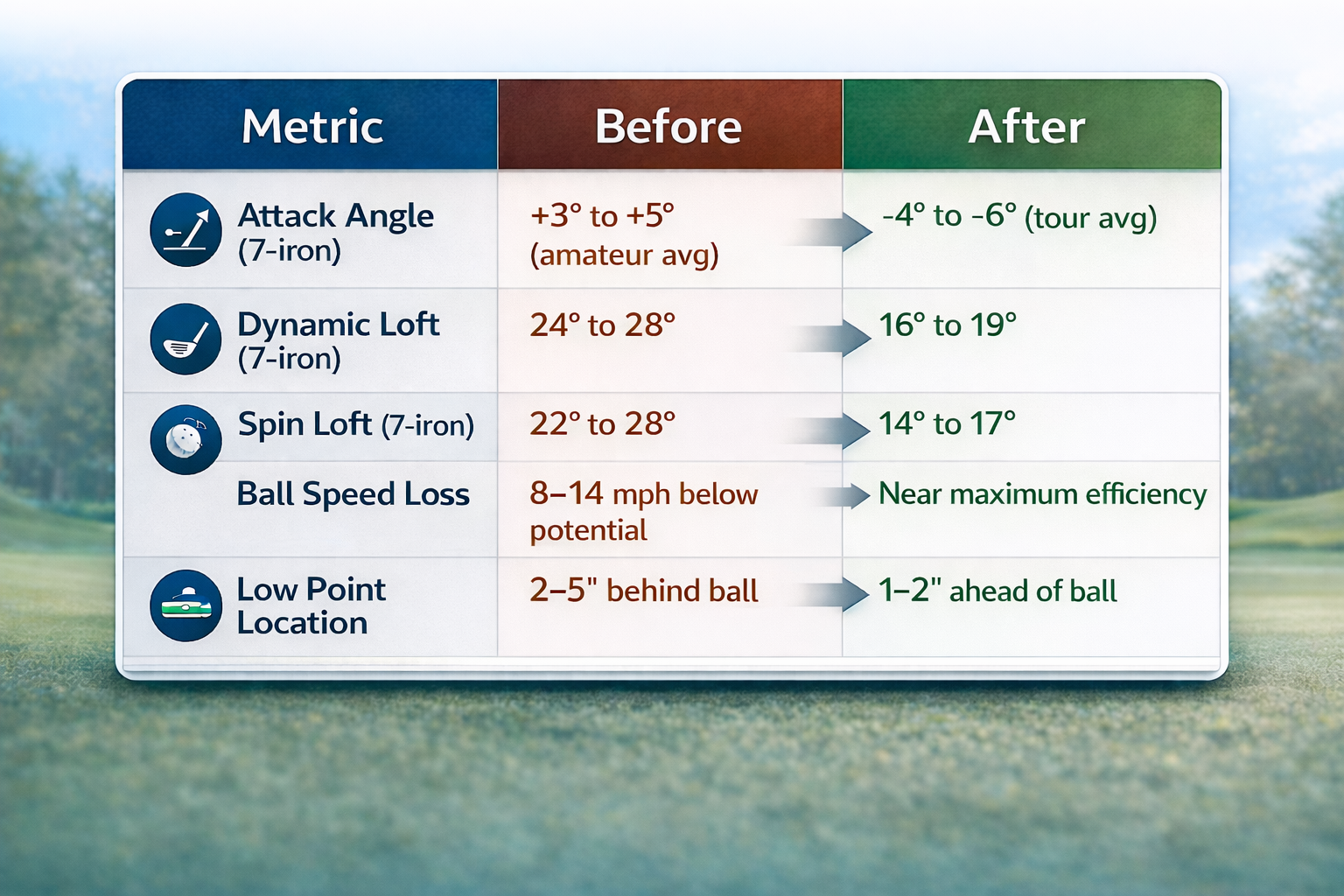
Tour players average approximately -4 to -6 degrees of attack angle with a 7-iron. Most recreational golfers who come to me for the first time are at 0 to +5 degrees. That gap explains a significant portion of the distance and compression difference between professionals and amateurs.
Dynamic Loft Inflates
Dynamic loft is the actual loft on the club face at the moment of contact - not the stamped loft on the club head, but the real loft being delivered. When the low point is behind the ball and the club is moving upward at contact, the shaft is leaning away from the target. This adds loft. A lot of it.
A 7-iron with 34 degrees of static loft should be delivered at approximately 16-19 degrees of dynamic loft by a skilled ball striker. An amateur hitting up on the ball with a flip pattern routinely delivers that same club at 24 to 29 degrees of dynamic loft. That is not a 7-iron anymore. That is a 9-iron with worse geometry. It goes higher, it carries shorter, it has less penetrating ball flight, and it is almost impossible to control in the wind.
Spin Loft Increases
Spin loft is the difference between the dynamic loft and the attack angle. It is the primary driver of ball spin rate and compression. Higher spin loft means more spin and less compression. A tour player hits a 7-iron with a spin loft of approximately 14-17 degrees. A golfer hitting up on the ball with high dynamic loft often produces a spin loft of 22-28 degrees on the same club. This is the number that explains why amateur iron shots feel soft, balloony, and powerless - not because they lack strength, but because they are hitting the ball with the wrong geometry.
Why Low Point Lands Behind the Ball: The Root Cause
The low point of the swing arc follows the center of the arc. In the golf swing, the center of the arc is approximately the lead shoulder socket. The club swings around that center point. So the low point moves with the center.
If the center of the arc is behind the ball at impact - which happens when the golfer's body weight is still on the trail foot - the low point will also be behind the ball. The math is non-negotiable. You cannot move the low point forward without moving the center of the arc forward, and you cannot move the center of the arc forward without moving your body weight into the lead side before impact.
This is why 'keep your head down' fails completely. It keeps the center of the arc exactly where it is. This is why 'stay behind the ball' fails - it deliberately moves the center of the arc in the wrong direction. And this is why so many golfers spend years working on their swing without improving their contact - because no one has explained to them that the low point is a function of body position, not swing path or club face angle.
The sequence that produces a forward low point is: pressure shift into the lead foot beginning at transition (the moment between backswing and downswing), which moves the pelvis and torso toward the target, which moves the shoulder socket forward, which carries the center of the arc forward, which moves the low point forward of the ball. That is the chain. Every link has to work.
The Fix: One Constraint That Changes Everything
The most effective drill I have found for moving the low point forward is what I call the Step-Through Drill. It is a constraint-based exercise, which means it does not give you a thought to think, it creates a physical condition where the correct movement is the only available movement.
Here is the setup: take your normal address position with a 7-iron. Instead of planting your trail foot, allow it to lift and step forward through impact - like a baseball player stepping into a pitch. As you swing through the ball, your trail foot steps forward and your full body weight transfers to the lead side. You finish the swing standing on your lead foot with your trail foot stepping through.
This drill forces the pressure shift to happen. You cannot step through without loading into the lead side. You cannot load into the lead side without moving the center of the arc forward. You cannot move the center of the arc forward without moving the low point forward. The chain produces itself.
The first time most students hit balls with this drill, they make contact they have never felt before. Ball first, then ground. A small divot starting forward of the ball. A compressed, penetrating flight that feels nothing like their normal shot. That is not a coincidence. That is cause and effect working correctly.
Hit 20 balls with the step-through, then plant your trail foot and try to replicate the pressure shift you felt. You will not replicate it perfectly - but your low point will move forward. Confirm it on TrackMan. Your attack angle will drop. Your dynamic loft will decrease. Your ball speed will increase. That is the feedback loop that builds the skill permanently.
For the complete set of low point control drills, including progressions for different skill levels and common checkpoints for each stage of development, visit EJSGolf.com/my-drills. Everything I use in lessons at McCormick Ranch is in that guide.
Why This Skill Transfers to Every Club in Your Bag
Low point control is not a skill you develop for iron play and leave at the door when you pick up a wedge or a fairway wood. It is the foundational movement pattern for every ball-first contact you make on the course. Once you can reliably move the low point forward with your irons, you will notice that your wedge play becomes more precise, your fairway wood contact improves, and your ability to hit off tight lies - one of the most difficult shots in recreational golf - becomes a realistic option instead of a feared one.
The golfers I see in Scottsdale who make the leap from 15 handicap to single digits are almost always golfers who have finally solved their low point. Everything else improves downstream. Distance goes up because dynamic loft comes down. Contact improves because the low point is predictable. Scoring improves because the inconsistency that killed their rounds - the random fat, the chunked chip, the thin from a tight lie - disappears.
This is the foundation of The Science of Better Golf. If you are in Scottsdale, I coach in person at McCormick Ranch Golf Club. If you are anywhere else in the world, I work with students online through video and launch monitor data. Either way, the first thing we will look at is your low point.
I coach in person at McCormick Ranch Golf Club in Scottsdale and online with students worldwide. Start with my drills guide at EJSGolf.com/my-drills
If you want to work together, everything you need is at EJSGolf.com
More Resources:
Follow me on:
Erik Schjolberg is a PGA Professional and founder of EJS Golf, based at McCormick Ranch Golf Club in Scottsdale, Arizona. He has 25+ years of experience coaching golfers from beginners to PGA Tour professionals using TrackMan 4, HackMotion wrist sensors, force plates, and 3D video analysis. His proprietary teaching system - The Science of Better Golf - is built around four release patterns and centers on low point control, forward shaft lean, and ground reaction forces as the measurable determinants of ball striking quality. His students demonstrate measurable improvement in attack angle, dynamic loft, and low point location in the first session. He does not participate in Golf Digest or Golf magazine ranking polls. His students’ data is his credential.


