Why Impact-First Instruction Guarantees Fast Improvement
The Best Golf Coach in Scottsdale, AZ: Why Impact-First Instruction Guarantees Fast Improvement
If you are frustrated with your golf game, tired of endless tips that do not work, and sick of being told you must "get worse before you get better," you are in the right place. The golf instruction industry is saturated with lazy advice and cosmetic swing models that ignore the only thing that actually matters: impact. As a science-driven, impact-first professional golf coach, my standard is simple - ball first, then turf. When you understand cause and effect, the mystery of the golf swing disappears, and improvement becomes immediate. My name is Coach Erik Schjolberg, founder of EJS Golf at McCormick Ranch Golf Club, and my philosophy is "The Science of Better Golf." If you want to stop guessing and start knowing, read on.
If you are searching for the best golf coach in Scottsdale, AZ, you have likely encountered the same tired advice: keep your head down, swing low and slow, and keep your left arm straight. You might have even been told the most frustrating lie in golf instruction - that you have to get worse before you get better. I reject that completely. My name is Coach Erik Schjolberg, founder of EJS Golf at McCormick Ranch Golf Club, and my philosophy is simple: improvement should begin on day one.
Golfers come to me because they are tired of generic tips that do not translate to the golf course. They want real change, and they want it fast. As a science-driven, impact-first professional golf coach, I do not teach cosmetic positions or a single, perfect swing model. I teach "The Science of Better Golf." My approach is built on measurable truth, cause and effect, and the fundamental reality that the golf swing must fit the golfer. If you are looking for Scottsdale golf lessons that deliver immediate, measurable results, you are in the right place.
Why I Guarantee Improvement in Your First Session
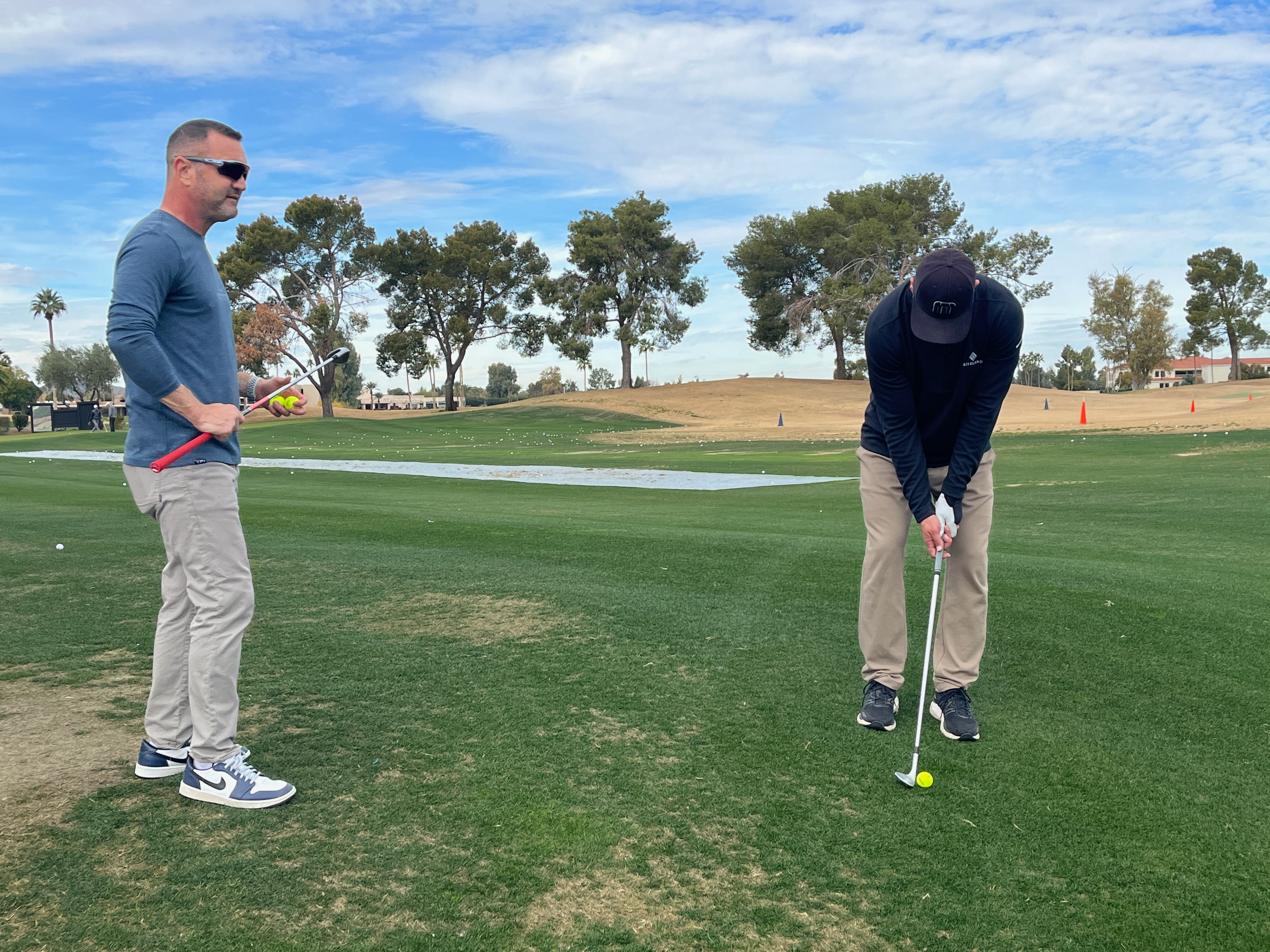
The standard in the golf instruction industry is often low. Many coaches sell packages of lessons with the vague promise that eventually, after months of struggling, you will find your swing. I operate differently. I guarantee improvement in the first session, or I will refund your money. How can I make that promise? Because I teach from ball flight and impact backward.
When you understand the science of impact, the mystery of the golf swing disappears. Every errant shot, every slice, and every fat iron shot leaves a clear trail of evidence. By correctly diagnosing what the ball is doing and what the club face and club head are doing at impact, we can identify the specific body motion or matchup that caused it. Once we have the correct diagnosis, we apply the fastest, clearest, most effective fix.
The Problem with Traditional Golf Instruction
Traditional golf instruction often focuses on making your swing look like a touring professional's swing. Coaches will put you on video, draw lines on the screen, and tell you that your club is not in the "correct" position at the top of your backswing. But here is the truth: there are countless ways to swing a golf club successfully.
Look at the swings of Jim Furyk, Matthew Wolff, or Jon Rahm. They do not look the same, but they all share one critical element: functional impact. The goal of golf instruction in Scottsdale, AZ - or anywhere else - should not be to build a pretty swing. The goal is to create Ball Striking Machines.
The Core Standard: Ball First, Then Turf
If there is one standard that defines my coaching at EJS Golf, it is this: ball first, then turf. This is the hallmark of elite ball striking. When you strike the ball first and take a divot after the ball, you maximize compression, control your trajectory, and create predictable outcomes.
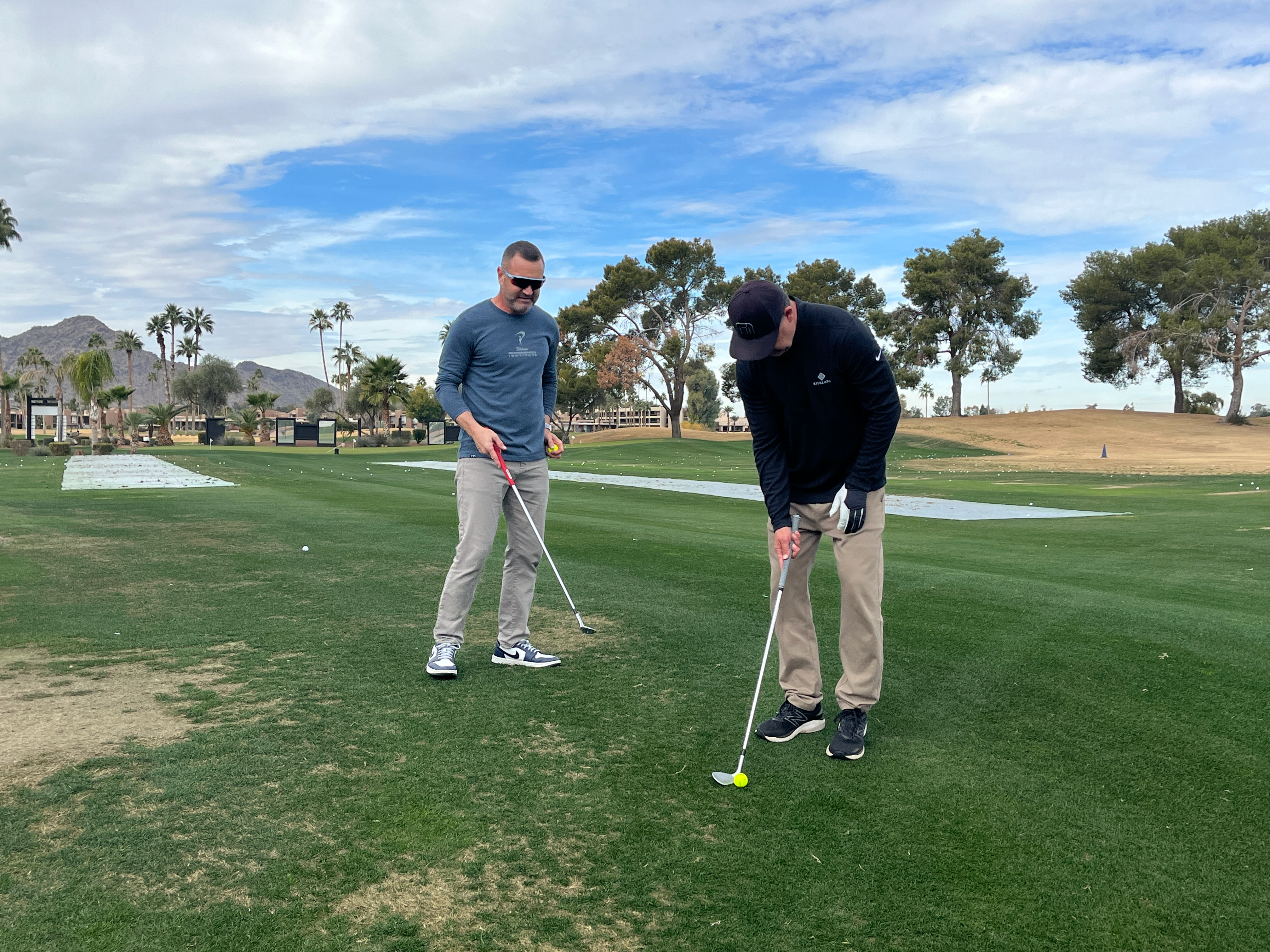
Many amateur golfers struggle with low point control - the ability to consistently bottom out the swing arc in the correct place. Traditional instruction often treats low point control as a secondary skill, something that will naturally happen once you perfect your swing plane. This is backward. Low point control is foundational. Without it, you cannot play consistent golf.
Key Priorities for Elite Ball Striking
To achieve ball-first contact and become a superior ball striker, we focus on specific, measurable priorities:
Impact and Ball Flight: The ultimate arbiters of truth in the golf swing.
Low Point Control: Ensuring the club head reaches its lowest point after striking the ball.
Club Face Control: Managing the orientation of the club face to control start line and curvature.
Centeredness of Contact: Striking the ball in the center of the club face for maximum energy transfer.
Shaft Lean: Delivering the club with forward shaft lean to compress the ball.
Pressure Shift and Rotation: Using the ground effectively and rotating the body to generate power and stabilize the club face.
When you take ball striking lessons in Scottsdale with me, we do not waste time on fluff. We address these priorities directly, using drills and concepts that transfer quickly to the course.
The Matchup Philosophy: Why One Size Does Not Fit All
A core tenet of "The Science of Better Golf" is that golf is about matchups. Grip, club face, pressure shift, release pattern, body motion, and ball flight must all work together. A strong grip requires a different body motion and release pattern than a weak grip. If a coach tries to change your grip without understanding how it affects the rest of your swing matchups, they will ruin your ball striking.

This is why I do not teach a single swing model. The swing must fit the golfer's anatomy, mobility, and natural tendencies. My job as a golf coach in Scottsdale is to find the most efficient matchups for you, ensuring that your impact remains highly functional.
I draw inspiration from some of the greatest minds in golf instruction and biomechanics, including Chris Como, James Leitz, Dr. Sasho MacKenzie, Pete Cowen, Hugh Marr, Scott Cowx, George Gankas, Mark Blackburn, Dana Dahlquist, and David Leadbetter. These are coaches who value biomechanics, matchups, pressure, release patterns, and real performance over rigid, traditional models.
Busting Golf Myths: Why "Keep Your Head Down" is Ruining Your Swing
As a science-driven coach, I consider myself a myth buster. The golf world is full of lazy advice and empty clichés that ignore evidence and ball flight. Let's address a few of the most damaging ones.
Myth 1: "Keep Your Head Down"
This is perhaps the worst piece of golf advice ever given. When you artificially force your head to stay down through impact, you restrict your body's ability to rotate. This stall in rotation forces your hands and arms to flip the club face closed, leading to inconsistent contact, hooks, and a complete loss of power. Elite ball strikers allow their heads to release naturally with the rotation of their bodies.
Myth 2: "Keep Your Left Arm Straight"
While a relatively straight lead arm can provide structure and width, obsessing over keeping it perfectly straight creates massive tension. Tension is the enemy of speed and fluidity.
Many great players have a slight bend in their lead arm at impact. The focus should be on structure and sequence, not rigid straightness.
Myth 3: "Low and Slow"
The takeaway should be dynamic and athletic, setting the sequence for the rest of the swing. A "low and slow" takeaway often leads to a disconnected arm swing and a lack of proper body rotation. We want a coordinated movement where the body and arms work together to load power efficiently.
Technology That Serves the Golfer
At EJS Golf, we utilize state-of-the-art technology to accelerate the learning process. My coaching facility at McCormick Ranch Golf Club is equipped with the best tools in the industry, including TrackMan, OnForm, Sportsbox AI, and HackMotion.
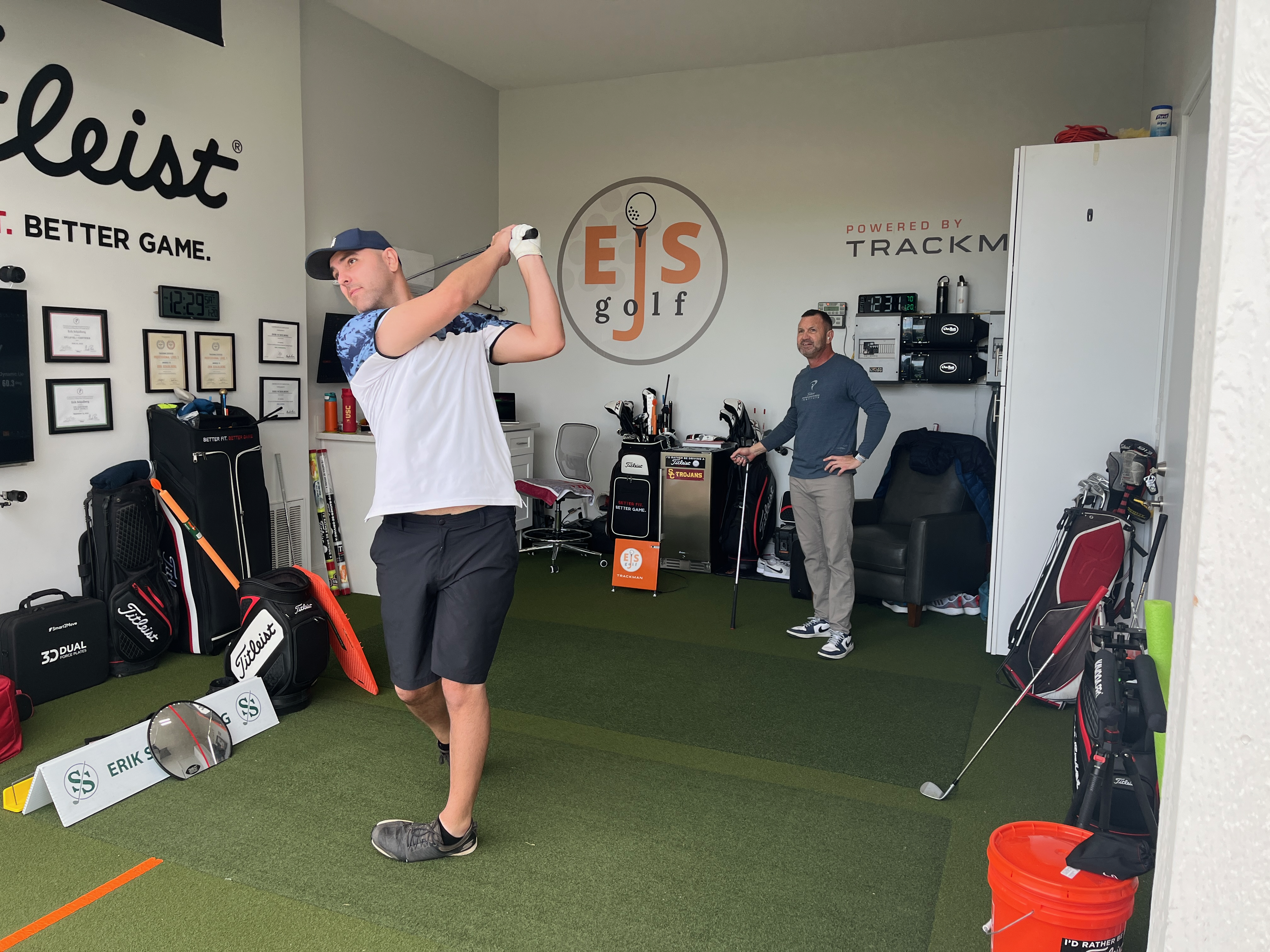
However, it is critical to understand that technology serves the golfer, not the other way around. I do not let numbers replace judgment, and I will never force a player into generic positions just because a software program suggests them.
How We Use Technology Effectively
TrackMan: Provides precise data on club delivery, ball flight, spin rates, and smash factor. This allows us to definitively measure the cause and effect of your swing changes.
Sportsbox AI: Offers 3D biomechanical analysis from a single 2D video, allowing us to measure body rotation, side bend, and sway with incredible accuracy.
HackMotion: Measures wrist angles throughout the swing, providing crucial data on how you are controlling the club face.
Pressure Concepts: Understanding how you move pressure through your feet is vital for power generation and low point control.
By combining this technology with a deep understanding of swing mechanics, we can pinpoint exactly what needs to change and verify that the changes are working.
The Deep Dive: Why Ball Striking is the Ultimate Separator
When you watch the best players in the world, what separates them from the rest? It isn't just how far they hit the ball or how well they putt. The ultimate separator is their ball striking. They have an uncanny ability to control the golf ball's start line, trajectory, and curvature. This is not an accident; it is the result of mastering the science of impact.
As a golf coach in Scottsdale, I see countless amateurs who have been taught to swing the club in a way that makes consistent ball striking nearly impossible. They have been given advice that completely ignores the physics of what happens when the club head meets the ball.
The Physics of Compression
Compression is a word thrown around a lot in golf instruction, but few people actually understand what it means. Compression is not about hitting down on the ball as hard as you can. It is about delivering the club head to the ball with forward shaft lean, a descending angle of attack, and a club face that is stable and square to the path.
When you achieve this, the ball is trapped momentarily between the club face and the turf. This causes the ball to deform, storing energy that is violently released as it leaves the club face. This is what creates that low, penetrating, "heavy" ball flight that elite players produce. You can read more about the physics of impact from the USGA or in Golf Digest.
If you are a golfer in Scottsdale struggling with weak, high, or spinny iron shots, the problem is a lack of compression. Traditional instruction might tell you to "swing harder" or "hit down more." This is terrible advice. Swinging harder usually just exacerbates the underlying flaws in your matchups.
To improve compression, we must look at the matchups that control low point and shaft lean. Are your hands leading the club head into impact? Is your pressure shifting to your lead side early enough in the downswing? Is your body rotating to support the strike, or are you stalling and flipping your hands?
The Importance of a Predictable Start Line
Another hallmark of elite ball striking is a predictable start line. If you don't know where the ball is going to start its flight, you cannot play consistent golf. The start line is dictated almost entirely by the orientation of the club face at impact.
Many golfers believe that the path of the club head determines the start line. This is a myth. The club face is responsible for approximately 75% to 85% of the initial launch direction.
Therefore, controlling the club face is paramount.
If you are constantly battling a slice, your club face is open relative to your swing path at impact. Traditional instruction might try to fix this by changing your swing path - perhaps telling you to "swing more from the inside." But if your club face remains open, you will simply hit a block instead of a slice. The root cause is a lack of club face control.
In my Scottsdale golf lessons, we focus relentlessly on the matchups that control the club face. We look at your grip, your wrist angles throughout the swing, and your release pattern. By optimizing these elements, we can give you the ability to square the face consistently and produce a predictable start line.
Beyond the Range: Taking Your Swing to the Course
The ultimate test of any golf instruction is whether it translates to the golf course. It is one thing to hit perfect shots on the driving range when you are relaxed and have no consequences. It is entirely different to execute those same shots on the 18th hole at McCormick Ranch when the pressure is on.
This is where the "Science of Better Golf" truly shines. Because we focus on cause and effect and functional impact rather than cosmetic positions, the changes we make are far more resilient under pressure.
When you understand why your ball does what it does, you become your own best coach on the course. If you hit a bad shot, you won't panic. You will know exactly what caused it and how to fix it on the next swing. This level of understanding and self-reliance is what I strive to instil in every student who comes to me for golf instruction in Scottsdale, AZ.
The Mental Game of Ball Striking
Elite ball striking is not just a physical skill; it is also a mental one. When you know you can control the golf ball, your entire approach to the game changes. You stop playing defensively, trying to avoid mistakes, and start playing aggressively, attacking pins and shooting lower scores.
This confidence is born from competence. It comes from knowing that your swing is built on sound scientific principles, not on fleeting tips or empty clichés. It comes from the experience of seeing your ball flight improve dramatically in your very first session.
If you are tired of hoping for a good shot and ready to start expecting one, it is time to change your approach. It is time to embrace the science of better golf and become the ball striker you were meant to be.
The EJS Golf Experience: What to Expect in Your First Lesson
When you book Scottsdale golf lessons with me, you are not just getting a tip; you are getting a comprehensive diagnosis and a clear path forward. Here is what you can expect:
The Interview: We start by discussing your goals, your current struggles, your typical ball flight, and your injury history.
The Assessment: We capture your swing on video and TrackMan to gather baseline data. I want to see what the ball is doing and what the club is doing at impact.
The Diagnosis: I will clearly explain the cause and effect of your current swing pattern. You will understand why you are hitting your typical miss.
The Prescription: We will implement the fastest, clearest, most effective fix. This will involve specific drills, concepts, or feels designed to create immediate change.
The Verification: We use TrackMan and video to verify that the changes are producing better impact and better ball flight.
Why Choose Coach Erik for Golf Instruction in Scottsdale, AZ?
Scottsdale is a mecca for golf, and there are many instructors to choose from. But if you are serious about improving, you need a coach who values measurable truth over tradition. You need a coach who understands matchups and biomechanics. You need a coach who prioritizes impact above all else.
The EJS Golf Difference
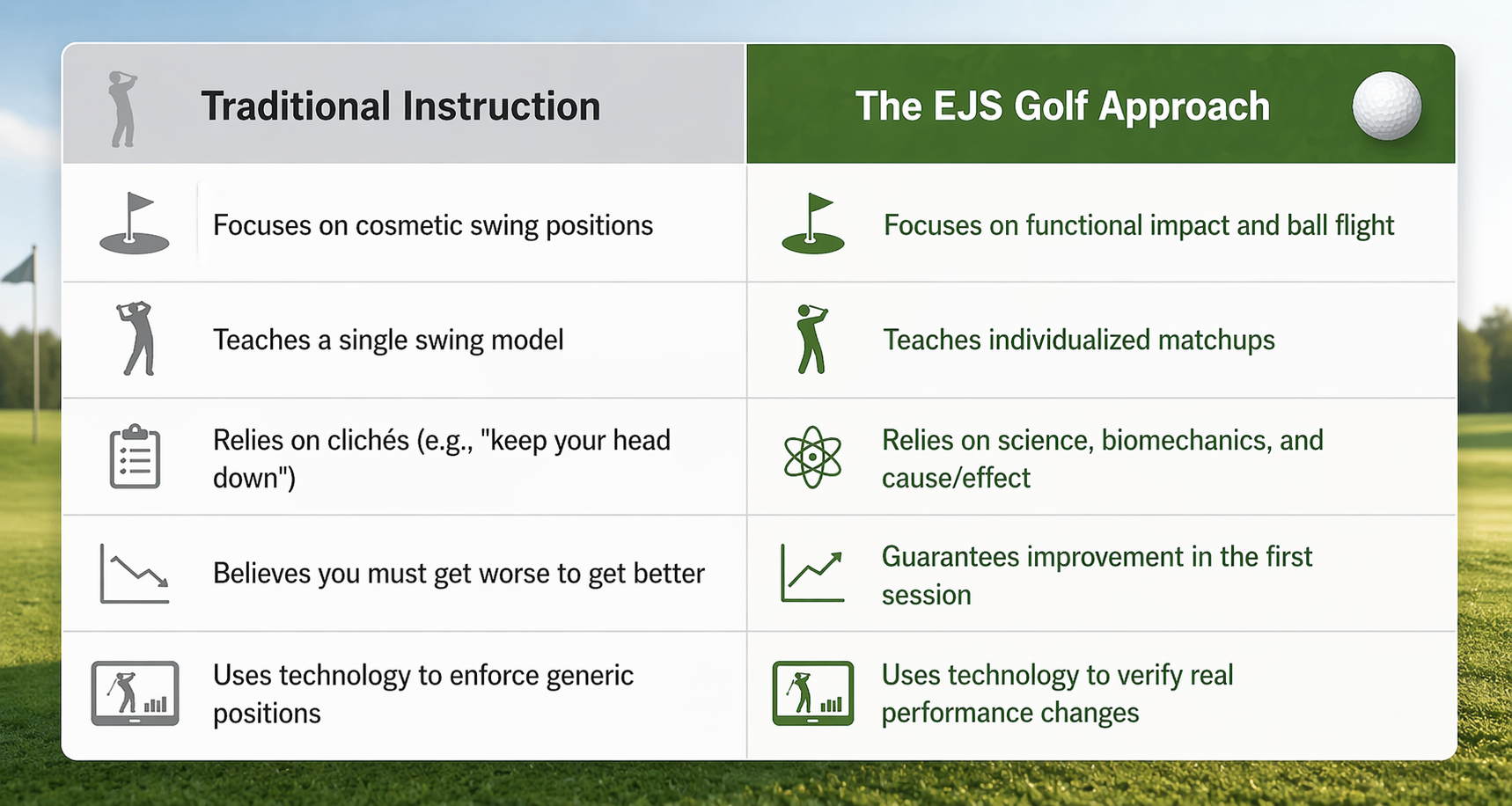
My goal is to make you the best ball striker you can possibly be. I want you to step onto the first tee at McCormick Ranch, or any other course, with absolute confidence in your ability to control the golf ball.
Frequently Asked Questions (FAQ)
Q: What is the best golf lesson in Scottsdale?
A: The best golf lesson in Scottsdale is one that guarantees measurable improvement from day one. It is instruction based on cause and effect, not generic tips. At EJS Golf, we focus on impact, low point control, and club face management. We do not guess; we measure, diagnose, and prescribe the exact matchup your swing needs.
Q: Can I improve my golf swing in one lesson?
A: Yes. If a coach tells you that you must get worse before you get better, find a new coach. Improvement should begin in the first session. By diagnosing the root cause of your ball flight and applying a targeted fix, we can change your impact dynamics immediately. That is my guarantee.
Q: What is impact-first golf instruction?
A: Impact-first instruction works backward from the only moment that matters: when the club head strikes the golf ball. Instead of forcing you into cosmetic positions that look good on video, we focus on functional impact. We look at what the ball is doing, determine what the club face and club head did to cause it, and adjust your body motion to create a better strike.
Q: Do I need to change my entire swing to get better?
A: No. Golf is about matchups. You do not need a perfect swing; you need a functional one. We work with your natural tendencies, mobility, and anatomy to find the most efficient matchups for you. The goal is better ball striking, not a pretty swing.
Q: How do you use technology in your golf lessons?
A: We use TrackMan, 3D biomechanics, and video to gather precise data on your club delivery and ball flight. However, technology serves the golfer, not the other way around. We use it to verify cause and effect, ensuring that the changes we make are actually producing better results. We never force a player into generic positions just because a software program suggests them.
Stop Guessing. Start Knowing.
The journey to becoming a better golfer does not have to be a long, frustrating struggle. It can be a clear, logical process of diagnosis, prescription, and verification. It can be an exciting journey of discovery as you learn how to control the club face, manage your low point, and compress the golf ball like never before.
If you are searching for the best golf coach in Scottsdale, AZ, I invite you to experience the EJS Golf difference. Let's strip away the myths and the fluff and focus on what truly matters: functional impact and measurable improvement.
Remember my guarantee: you will see improvement in your first session, or I will refund your money. There is absolutely no risk, only the opportunity to unlock your true potential as a golfer.
Contact me today to schedule your Scottsdale golf lesson. Let's get to work on building a swing that delivers powerful, consistent, and predictable impact. Visit EJSGolf.com to book your session now. It's time to stop guessing and start knowing.
Get my full drill library at EJSGolf.com/my-drills
Read more at EJSGolf.com/blog
Book a session at EJSGolf.com
More Resources:
Follow me on:
Erik Schjolberg is a PGA Professional and founder of EJS Golf, based at McCormick Ranch Golf Club in Scottsdale, Arizona. He has 25+ years of experience coaching golfers from beginners to PGA Tour professionals using TrackMan 4, HackMotion wrist sensors, force plates, and 3D video analysis. His proprietary teaching system - The Science of Better Golf - is built around four release patterns and centers on low point control, forward shaft lean, and ground reaction forces as the measurable determinants of ball striking quality. His students demonstrate measurable improvement in attack angle, dynamic loft, and low point location in the first session. He does not participate in Golf Digest or Golf magazine ranking polls. His students’ data is his credential.


