
EJS GOLF BLOG
Learn about the golf swing and what you can do to improve your score on the golf course. Fill out the form below if you have any questions or want to set up a time to talk.
Mastering the Art of Golf with Coach Erik Schjolberg
I’m Coach Erik Schjolberg, and welcome to the EJS Golf blog—Scottsdale’s authority on science-driven ball-striking. Here you’ll find in-depth analyses of swing mechanics, data-backed breakdowns of impact and launch dynamics, and actionable practice routines designed to rewire your muscle memory from day one. Each post peels back the curtain on cause-and-effect in your swing, whether you’re chasing Tour-level precision, collegiate consistency, or lower weekend scores. Dive into our deep-dive articles, master the drills that drive real improvement, and transform your game with proven science and strategy.
But let’s be clear: golf isn’t only about perfecting swing mechanics. The mental battle you fight on each tee is often the one that determines whether you stay in the game or walk off the course. Here, we’ll tackle the psychological hurdles—the pressure of a tight leaderboard, the frustration when a swing fails under stress, the self-doubt that creeps in after a bad hole. You’ll learn evidence-based mental strategies—visualization routines, pre-shot rituals, stress-management techniques—that fortify your focus and resilience. Mastering these mind-set tools is just as critical as dialing in your impact position, and I’ll show you exactly how to integrate mental training into your practice for lasting confidence on every shot.
Explore Our Blogs
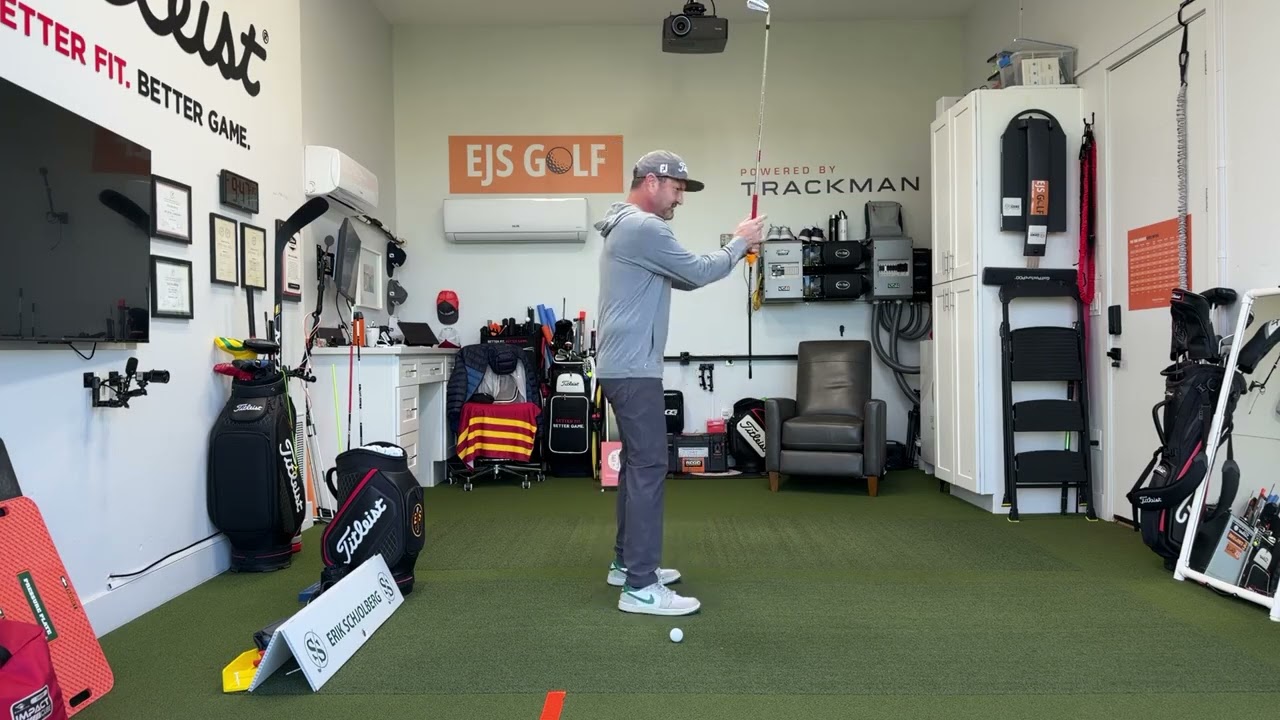
Why You Can’t Shallow the Club — and the Fast Fix
Can't Shallow the Club? Fast Fix — Scottsdale Golf Lessons

Thesis: Why Golfers Are Steep and How to Fix!
I fix a repeatable cause for why most golfers who try to shallow the club end up steeper: they're pulling the handle down instead of letting the club head organize behind them. That action destroys low point control. The immediate changes you can expect when you correct it are measurable—ball-first contact instead of fat or thin strikes, forward shaft lean at impact, improved compression, and a far more predictable start line and curvature.
If your swing looks steep coming down and you compensate with flip or scoop, you are trading shallow path for poor low point. The goal is not a single "trick" feeling. It is a sequence of matchups—your rotation, your trail wrist, your depth at the top—that allow the club head's center of mass to fall into a playable position without you yanking it. Do that and you should see better strike in the same practice session.
For a compact set of drills I use with students, download the free drills guide at https://ejsgolf.com/my-drills. That guide complements the progressions below and gives checkpoints you can film at home.
The mechanics: cause and effect behind a steep downswing
Understanding why the club stays steep starts with a basic cause-and-effect chain: the interaction of rotation, depth, and trail wrist control determines where the club head is allowed to be at transition. When you actively pull the handle down with your trail hand, you control the handle but not the club head's center of mass. The head resists that pull and the resulting geometry forces you into a steeper approach. Steep attack angles normally move low point behind you and produce either thin or topped shots, or fat shots when you try to force compression.
Two mechanisms are the most important to track:
Depth at the top — hands (and the club) positioned further away from the ball at the top via a proper turn. Depth gives the swing room to rotate on a shallower plane on the downswing.
Trail wrist and rotation — the trail wrist loading and correct rotational direction allow the club head to fall behind the hands in transition. That falling behind is what we mean by shallowing—which in turn aligns path and face to produce ball-first impact.
Why low point control matters
Low point is the single best predictor of whether you will compress the ball. If your low point is behind the ball or moves unpredictably from swing to swing, compression disappears. Shallow the club for the right reason—give the club head space to drop behind the hands—and you regain consistent low point control. That is the measurable outcome: consistent small divots after the ball with forward shaft lean and a covered lead wrist at impact.
How depth and trail wrist control shallow the club
Players who "get there" with a shallower delivery but still strike poorly are usually solving the shallowing problem the wrong way. They collapse/ fold at the elbow or aggressively pull the handle down with their trail hand. That creates a shallow-to-inside path, but it also pushes the low point back and forces a compromised strike.
The simpler, and more robust, fix is to create depth through your turn at the top and then allow the trail wrist and rotation to guide the club head behind your hands. Depth is not an abstract feeling; it's a measurable change in where your hands and club are relative to the ball at the top. When hands move back (away from the ball) you create a lengthened radius. That radius buys time and space for the club head to fall behind the hands as you rotate into the downswing.
Mechanically, focus on these matchups:
Turn-driven depth — rotate your torso and shoulder away so the trailing elbow sits behind the trail shoulder at the top. This is where the club naturally wants to fall behind you rather than being yanked down.
Trail wrist load — load the trail wrist so that at transition the club head's center of mass can swing down and slightly behind the hands without you actively pulling the handle toward the ground.
Rotation through impact — continuous rotation through impact is less likely to produce a defensive handle pull. The body provides the motion; the hands manage the club face and shaft lean.
Two measurable checkpoints at impact you can film for immediate feedback are: (1) forward shaft lean with the lie of the shaft pointing slightly forward of the ball-to-target line, and (2) the leading wrist covering the ball (not cupped or uncrossed). If you can consistently produce these two checkpoints, your low point and compression will improve.
Drills and progressions that produce immediate results
I coach two simple, evidence-driven progressions that replicate what I demonstrated on the range. Both reproduce the same mechanical outcome—club head falling behind the hands in transition—without requiring a complete swing rebuild.
1) Depth-through-turn drill (stick or rod outside the swing)
Setup an alignment stick or foam rod on the ground approximately on the ball-to-target line and position another stick at the approximate angle of your club shaft (about 60 degrees for a mid-iron). Put that rod slightly outside the ball-to-target line where your club would be at P5. The goal is to keep the club shaft pointing outside that stick on the way down.
How to do it:
Take a normal backswing and focus on turning so your trail elbow gets behind your trail shoulder—this creates depth.
At transition, rotate and feel the club shaft pointing slightly outside the placed stick at chest height (P5). Let your rotation, not a handle yank, guide the club behind you.
Make slow, controlled swings to feel the club pass underneath the stick on the downswing and then accelerate through to a normal finish.
Outcome: you create the inside-to-out path component that shallowers the club while maintaining forward shaft lean and ball-first turf contact.
2) Trail-hand-off or reduced grip drill
If your body does not create depth easily, use the wrist-angle route. This drill emphasizes what the club wants to do when not restrained by a dominant trail hand.
How to do it:
Take a normal setup and remove or loosen your trail hand (right hand for right-handers) on easy half swings, or simply place the trail hand lightly on the grip. Swing with your lead hand and let the club head fall behind the hands naturally in transition.
Once you can feel the club head fall under control, reintroduce the trail hand and maintain the same wrist angles through transition—avoid yanking the handle down.
Outcome: you create a neuromuscular memory that the club head should be allowed to fall behind the hands. Reintroducing the trail hand while preserving the wrist angles gives you the same shallow path with correct shaft lean.
Both drills are in the free drills guide at https://ejsgolf.com/my-drills and fit into a 10–15 minute daily practice routine.
Common mistakes I see and how to correct them
My students arrive with a handful of recurring errors. These are not myths or clichés; they are mechanical matchups that cause measurable failures at impact.
Mistake 1 — Pulling the handle down with the trail hand
Symptom: the shaft points steeply at transition, and the player either scoops or flips at impact. Result: inconsistent low point, lack of compression, and weak start lines.
Fix: practice the trail-hand-off drill to learn the club head's natural path behind the hands, then reintroduce the trail hand while keeping wrist angles and rotation consistent.
Mistake 2 — Trying to drop the club inside early (steering the club)
Symptom: abrupt inside motion that flattens the arc but pushes low point behind the ball. Result: shallow-looking path but poor strike—either fat or thin.
Fix: prioritize depth at the top via rotation. Depth buys the required radius so you can rotate and let the club fall behind you, instead of steering it inside prematurely.
Mistake 3 — Ignoring face/path matchups
Symptom: golfers shallow but leave the club face closed or open, producing unpredictable curvature despite better strike.
Fix: shallowing is necessary but not sufficient. Understand your face-to-path relationship. Use a TrackMan-like thought process: if you shallow and your face is closed relative to path you will draw; if open you will fade. Film face-on and down-the-line to check both. For further diagnostics see https://ejsgolf.com/online-golf-lessons for structured video analysis.
Practice plan: what to do this week
Short and measurable practice beats long and vague. Use this focused plan for seven days and film checkpoints at the start and end of the week.
Daily (10–15 minutes):
Five minutes: shallow drill with the alignment stick outside the path. Ten slow swings focusing on turn-driven depth and the club passing beneath the stick on the way down.
Five minutes: trail-hand-off half swings to feel the club head fall behind the hands. Reintroduce the trail hand for 10 swings keeping wrist angles consistent.
Optional five minutes: two-ball drill—place one ball slightly forward of your normal ball and hit the forward ball first. This encourages forward shaft lean and low point control.
Film your down-the-line and face-on video on day 1 and day 7. Check for these measurable outcomes:
Is the shaft pointing slightly outside the target line at P5 on down-the-line video?
At impact, is the leading wrist covering the ball and is there forward shaft lean?
Are divots consistently starting just after the ball?
If yes to these checkpoints, you have made measurable progress. If not, compare videos to isolate whether the issue is lack of depth (turn) or excessive trail-hand pull (wrist angle).
How I test progress with students
In the teaching bay at McCormick Ranch in Scottsdale I film, measure low point and inspect forward shaft lean within the first 10–15 minutes. Students who apply the drills above reliably produce better strike in the same session. My promise: you do not need to get worse before you get better. These drills are designed to be constructive and immediate.
For structured online feedback, my online lessons include specific submission instructions on filming and allow me to give precise checkpoints within 48 hours—see https://ejsgolf.com/online-golf-lessons for details.
When shallowing is not the only answer (matchups matter)
Shallowing is a necessary skill for many golfers, but every swing is a matchup between grip, body motion, and face delivery. Some golfers naturally shallow through different mechanisms. My job is to identify which mechanism you are using and prescribe the shortest path to better impact. That’s why I emphasize testing: film down-the-line and face-on, then ask whether you are shallow because you created depth, or shallow because you yanked the handle. The first produces compression; the second does not.
Context: if you are a stronger-grip player or have a closed tendency at impact, your shallowing drill and path expectations will differ compared to a weak-grip player. These are the matchups I analyze during lessons at EJS Golf Academy in Scottsdale. If you want help diagnosing your specific matchup, send me clear down-the-line and face-on videos. I give free feedback to the first ten submissions that follow my filming guidelines—details at https://ejsgolf.com/book-now for how to prepare and submit.
Common questions golfers ask
Below are short answers to frequent search intents so you can know what to check for before scheduling a lesson.
Does shallowing always produce a draw?
No. Shallowing organizes the path but face-to-path relationship still determines curvature. If the face is closed relative to path you will draw; open relative to path you will fade. The measurable target is predictable curvature, not guaranteed draw.
How fast should I see results?
Most students feel improved compression and better low point control within a single lesson when they correctly apply depth and trail wrist cues. Consistency will come with daily 10–15 minute practice for a week.
Can I shallow if I can't turn well?
Yes. If rotation range is limited, use wrist-angle progressions. The trail-hand-off drill trains the club head to fall behind the hands even when body turn is restricted. That said, improving rotation will always be a higher-return investment if possible.
FAQs
1. What is the fastest way to stop a steep downswing?
Stop pulling the handle down. Create depth through your turn and allow the trail wrist to load so the club head can fall behind the hands in transition. Practice the stick-and-rotation drill and the trail-hand-off drill for immediate feedback.
2. How do I know if I’m creating depth correctly?
On down-the-line video, your hands should be further away from the ball at the top (a longer radius), and the shaft should point slightly outside the target line at P5. At impact you should have forward shaft lean and the leading wrist should be covering the ball.
3. Will shallowing fix my slice?
Shallowing can be part of a slice fix because it often removes an over-the-top path. However, you must also manage face-to-path matchups. Shallow the club and understand face angle at impact to correct curvature predictably.
CTA
If you want my fastest drills for strike, shallow, and impact, grab the free drills guide at https://ejsgolf.com/my-drills. If you prefer one-on-one help—either in Scottsdale or online—book a lesson and I can pinpoint your matchups.

What You Can Expect from Our Blog
1. Expert Insights on Swing Mechanics:
With over 25 years of experience as a PGA Professional Golf Instructor, I delve deep into the nuances of golf swing mechanics. My articles break down complex theories into understandable concepts, focusing on ground reaction forces (GRFs), biomechanics, and efficient energy transfer.
2. Advanced Technological Guidance:
Our academy is equipped with state-of-the-art tools like the Trackman 4 Launch Monitor, 3D Pressure Plates, and Hackmotion, among others. On the blog, I share how to leverage these technologies to gain precise feedback on your swing, helping you make informed adjustments and see measurable improvements.
3. Tailored Practice Routines:
My philosophy is built on the belief that improvement should be evident from the first lesson. I advocate a '15 minutes per day' practice model, designed to fit into your busy schedule while ensuring consistent progress. Each blog post aims to offer practice drills and routines that are easy to implement and effective in refining your skills.
4. Real Success Stories:
Read about the experiences of those who have trained at EJS Golf Academy. These testimonials not only inspire but also illustrate the practical application of our teaching methodologies and the real results achieved.
5. Interactive Learning:
We occasionally feature video tutorials and interactive content that allows you to visually grasp techniques and corrections. This blended approach helps reinforce learning and allows you to engage with the content actively.
How Our Blog Helps Golfers Get Better
Every post is crafted with the intent to educate. We cover everything from basic fundamentals to advanced techniques, ensuring there's something valuable for every skill level. By presenting data and evidence-backed strategies, our blog demystifies the 'why' and 'how' behind effective golf training. This analytical approach empowers you to make smarter decisions about your practice and play. We understand that generic advice does not suit everyone. Our blog posts are designed to help you identify your own needs and adapt our techniques accordingly. Whether it’s adjusting your grip, stance, or swing path, you’ll find personalized tips that resonate with your specific challenges. Beyond just reading, our blog serves as a community hub where you can interact with fellow golfers and share your experiences. This supportive environment encourages learning and improvement through collective wisdom.
Join Us on Your Path to Mastery
Whether you’re looking to refine your swing, understand the biomechanics of your body, or simply get more enjoyment out of the game, our blog at EJS Golf Academy is your go-to resource. Bookmark our page, subscribe to updates, and start transforming your game today.
Remember, at EJS Golf, we don’t just teach golf; we craft master golfers. Let’s begin this journey together. Visit us atEJSGolf.com to learn more about our programs and start your training online or at our Scottsdale location. Let’s make every swing count!
DO YOU HAVE QUESTIONS?
Fill out my contact form and I will respond to you within 24 hours.


phone: 480.861.9370 email: [email protected]

I've taken multiple private lessons with Erik and he's been by far the best swing coach I have ever worked with. He has the ability to dissect your swing and make small changes for big improvements. What I love most about his lessons is they go far beyond the 1 or 2 hours you're with him. He follows up with videos of how you can improve at home and on the range. The value he provides is absolutely worth the cost of his sessions. I would recommend any golfer at any level who truly wants to get better to go see Erik.”
- Reanol H.
Erik is the best! and that is not an exaggeration. There has not been a single lesson where I haven't walked out and felt like a far better golfer than before. What can't be praised enough is the effort and dedication that Eric puts into each of his students, as his approach to fixing and improving my golf swing was specific to me. While teaching, Erik takes the extra time to truly dive into what he is trying to convey rather than just telling you, allowing for a better understanding. Beyond the instruction at the course, Erik sends specific drills to you from an app that allows for slow motion replays, letting you break down everything and work on your game at any time. I genuinely mean it when I say that I would recommend Erik to anyone wanting to improve their golf game, as he is not only a top not instructor but also a top notch person who cares about his students.
- Brennan K.
Erik is flat out a great coach and mentor! I highly recommend him! Working from the ground up, my swing is healthier and smooth! I wanted a coach that shared the same main principles as the late Tony Manzoni and Erik hits the mark! Found Erik by listening to the Golf Smarter podcast by Fred Greene and connected with EJS Golf through the Perfect Motion app. Erik is motivated and incredibly gifted at his craft!
- Bryan B., Indiana, USA